The Moon on 5/9/08
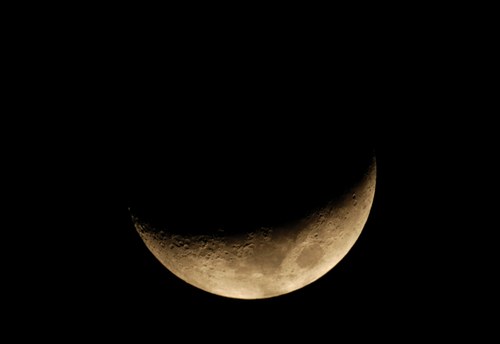
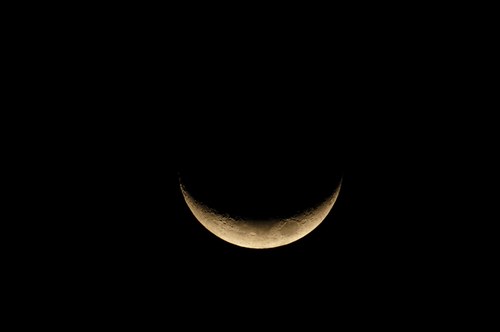
Lots of clouds headed our way, but I was able to get this quick shot of the Moon.
Astronomical observations by a guy in Flintstone, Georgia
Lots of clouds headed our way, but I was able to get this quick shot of the Moon.
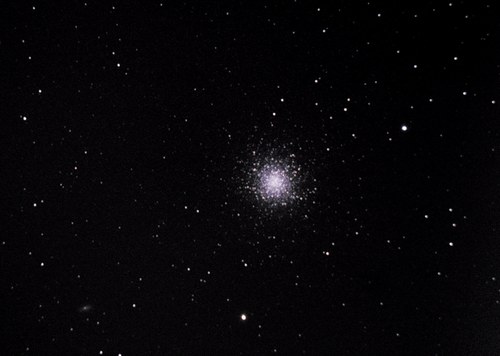
M13-Great Hercules Cluster on 5/8/08
Here's the Great Hercules Cluster taken with the DSLR. There's a larger field of view in which you can see a small galaxy in the bottom left that isn't visible in the image taken through the DSI cameras. But this image doesn't have as much detail as the DSI images. I plan on taking some longer exposures of this soon hopefully on a less humid night.
Tonight was extremely humid, but the sky looked too inviting not to set up the scope. The Moon was quite bright for being a crescent and was very crisp in the sky.
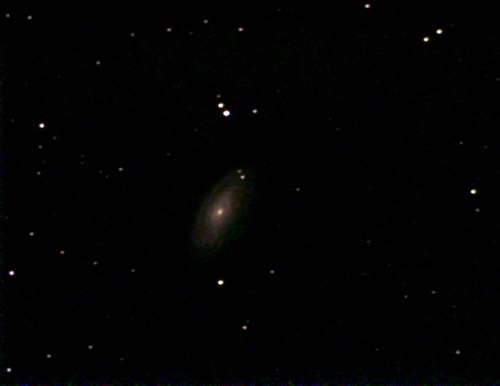
I also took a couple quick shots with the D50 of the Sombrero Galaxy:
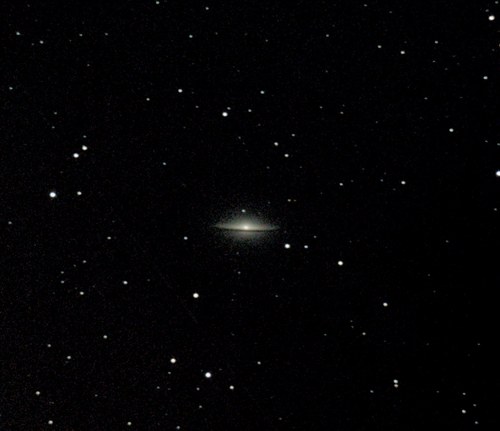
M104-Sombrero Galaxy on 5/8/08
This was just a few images - and short ones at that. I'll probably get some more on a less humid night. I wanted to compare the DSLR image with the DSI image. If you look at this post, you can see the difference - the biggest difference is the field of view. The DSLR is much larger. But the detail is definitely better on the DSI. With some longer exposures on the DSLR, who knows? I plan on finding out soon.
Like the send your name to the moon thing I linked to the other day, Nasa's Kepler Mission allows you to submit your name to be put on a DVD on the Kepler probe. This spacecraft is designed to look for Earth-like planets in the "habitable zone" near Sun-like planets. Basically it'll be looking for planets like Earth in an orbit like Earth around a star like the one the Earth orbits. You can submit your name here.
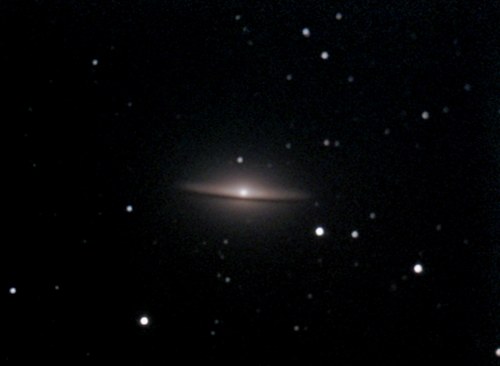
M104-Sombrero Galaxy on 5/4/08
Last night I got a couple more targets on my way to finishing off the Messier catalog, including this shot of the Sombrero Galaxy (M104). I also began experimenting with actively cooling my camera (which helps reduce noise and make the camera more sensitive). I took the Peltier cooler out of a small mini-fridge that we had gotten free as a promo from Office Depot and after grinding down part of the back of my DSI camera (the less expensive of the 2 I own - the backs are interchangable), I attached the cooler and then attached the back to my DSI-II color camera. The cooler could cool down the camera pretty quickly, but there were two problems I ran into. First, when the cooler is operating, the images that I get back from the camera look wrong - there was some sort of electronic interference. It might be from the fan, so I'm going to try to run it without the fan next time to see if that's the source of the problem. The second issue is that it formed dew on the imaging chip once the temperature got below about 10 degrees below the ambient temperature. I'm not sure what I might be able to do with this problem, other than go out when there's less humidity. We'll see, but I'm hoping that I can figure out a solution to both of these problems so that I can keep the camera temperature really low and get better pictures during the summer.
Okay, I know this is a bit hokey, but I just can't resist things like this. Nasa is giving everyone the opportunity to send their name on the Lunar Reconnaissance Orbiter to the Moon. It doesn't cost anything and is way cooler than having a star named after you because unlike those - this isn't pretend. This article indicates that the names will be put in a database "on a microchip". Does that mean a flash card? SD-RAM card? In the past, they've been on CD-ROM's. Whatever it is, it's kind of cool to know that my name will be on this chip forever on the Moon. Or at least until an asteroid hits it and destroys the thing...
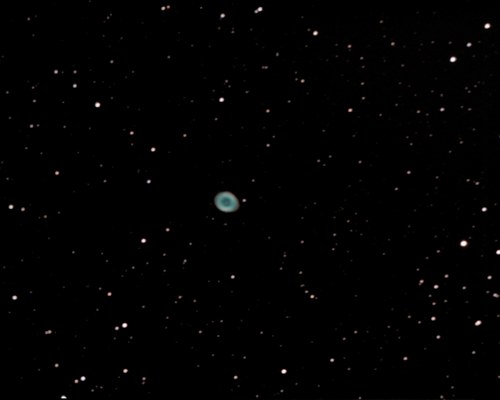
Okay - one more... After getting M13, I couldn't resist going to M57 - the Ring Nebula. This was another target I hadn't imaged or seen with my LXD75 or DSI-II. It was so much brighter and crisper than in my old scope - just beautiful. I really like planetary nebula and can't wait to try the Dumbbell Nebula with this scope - it should be quite large with a lot of detail.
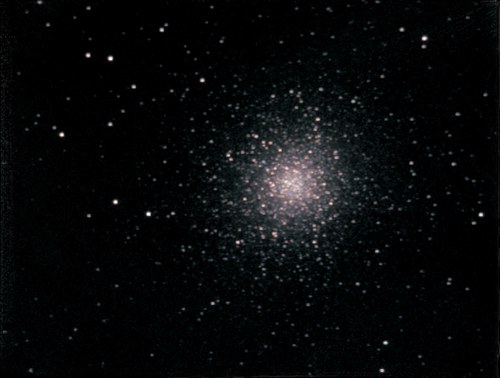
M13-Great Hercules Cluster on 4/30/08
I was just about ready to park the scope and put everything away for the night when I noticed that M13 was out. I hadn't imaged it since the fall (before I got my current scope and camera) and I just couldn't resist - it's 12:46am now and I'm just now starting to put stuff away. I'm very happy with this image, though...
Almost 2 months ago, I started my Messier Marathon where I attempt to get images of all 110 of the Messier objects in a short period of time. I've been very busy lately and have had some bad weather to contend with, but I've been slowly continuing to add to my Messier images. As of tonight, I've passed the halfway mark and have 57 of the objects imaged so far. M88 (above) is one I hadn't imaged before, but intend to come back to as soon as the marathon is over. With some longer exposures, I expect that it will reveal quite a lot of detail.
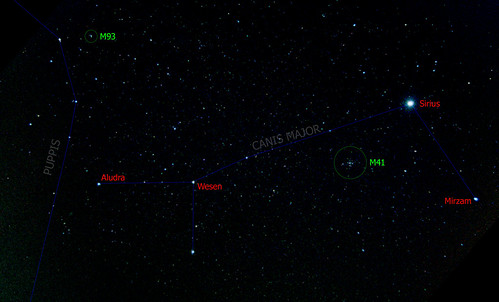
Canis Major on 4/21/08 (labelled)
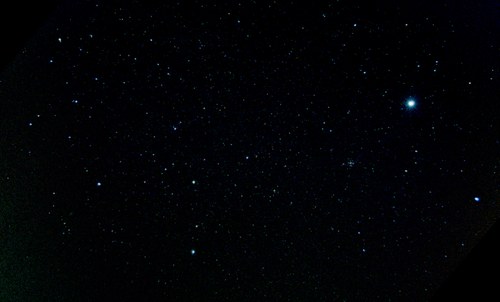
About a week ago, I took a few wide-field exposures with my D50, but only had time to process one of the images. This evening, after setting up, the clouds rolled in, so I thought I'd take the time to finish processing the other images. This one of Canis Major turned out pretty well. Above, you can see the annotated version which points out M41 and M93 that are visible in the image along with Sirius (the dog star) which is the brightest star in the sky (other than the Sun, of course). Below is the non-annotated version. You can click on either of these images to see the much higher resolution versions.