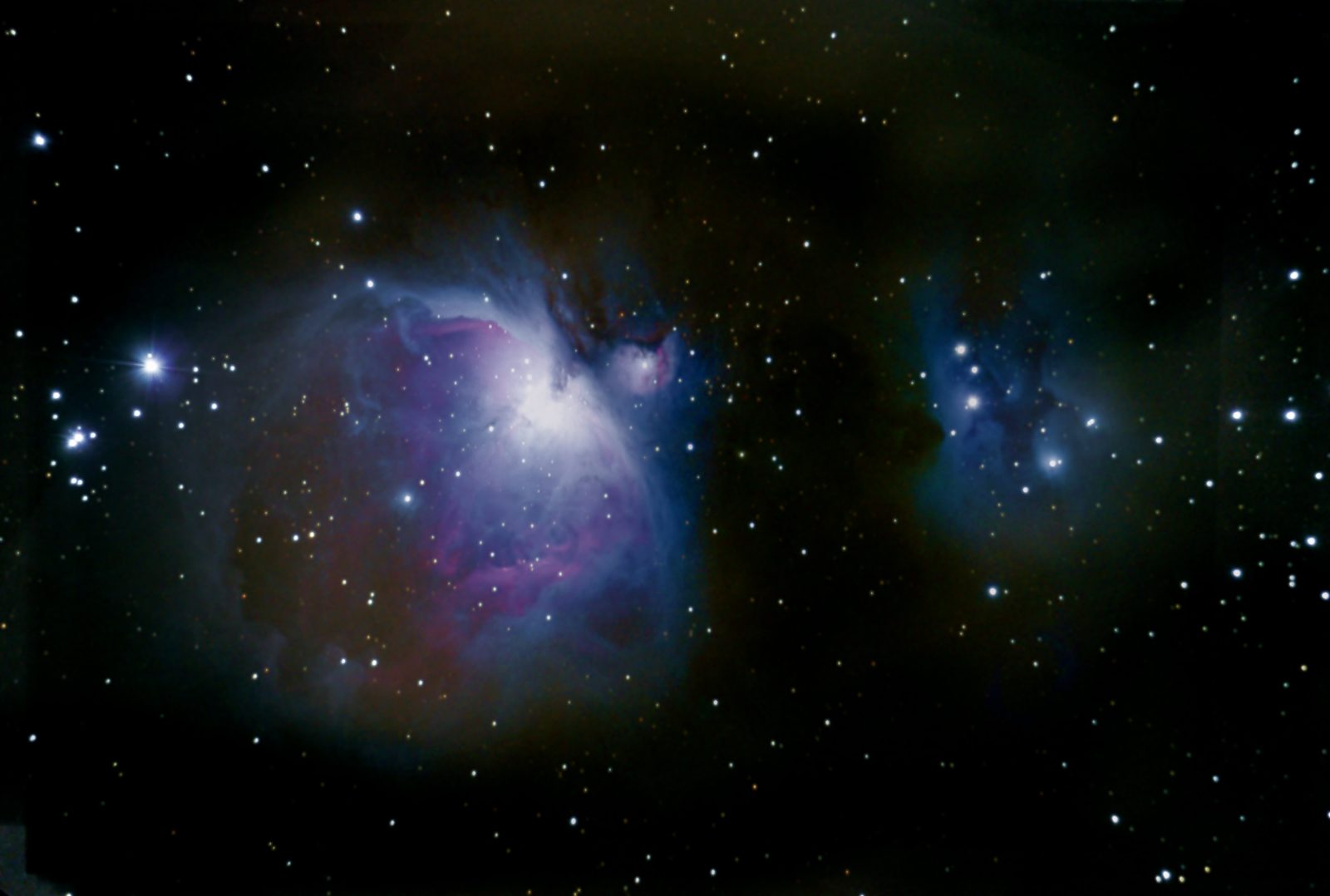
The Great Orion Nebula (M42) and the Running Man Nebula, photographed from Flintstone, Georgia

Flintstone Stargazing

Astronomical observations by a guy in Flintstone, Georgia

M42 – the Great Orion Nebula, February 2009

Category: astronomy

September 21, 2007

The Little Dumbbell Nebula (M76)

Filed under: astronomy, Astrophotography, Messier Objects, Observation Journal — Tags: M76 — Ed @ 11:53 pm


M76-Little Dumbbell Nebula on 9/21/07

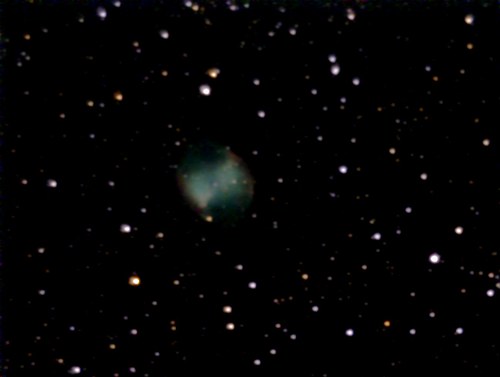
This is the Little Dumbbell Nebula (M76) found in the constellation Perseus. It is similar in color and appearance (though smaller) to the Dumbbell Nebula that I imaged last night. Frankly, I think that they should be called the Apple Core Nebulas, but I guess I'm not in charge.

According to Wikipedia, "It is one of the faintest and hardest to see objects in Messier's list." If that's true, then I shouldn't have too much trouble finishing my Messier hunt.

The Andromeda Galaxy (M31)

Filed under: astronomy, Astrophotography, Messier Objects, Observation Journal — Tags: M110, M31, M32 — Ed @ 10:11 pm


M31-Andromeda Galaxy (2) on 9/21/07

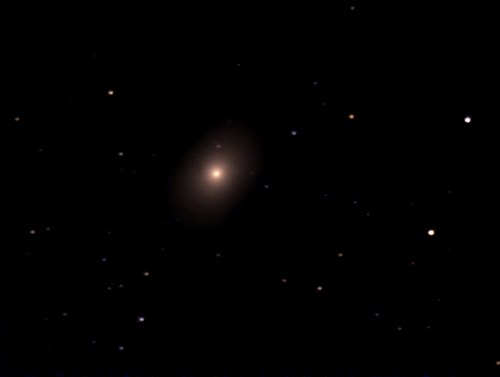
This image is a 12 minute exposure of M31 - The Andromeda Galaxy. My software has combined 90 8 second images to bring out the details. Technically, this image also contains M32 and M110 as well, which are found right by M31. Actually M32 is the small fuzzy bright area near the "top" of Andromeda in this photo and M110 (I believe) is the slightly fuzzy thing at about 4 o'clock from Andromeda's center and just a little ways away.

The Moon high in the night sky

Filed under: astronomy, Astrophotography, Moon, Observation Journal — Ed @ 10:05 pm


The Moon on 9/21/07

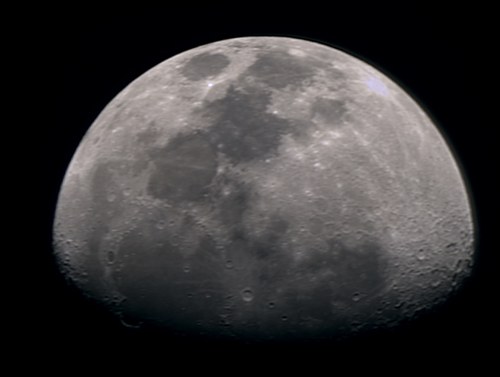
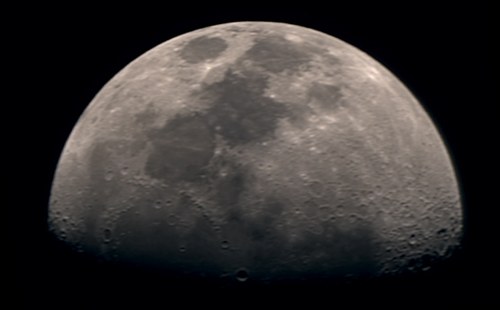
The evening sky has really cooperated with me this week. You can see the moon high in the evening sky as it continues to wax on it's way to a full moon a few nights from now. In this view you can see the Copernicus Crater is not not as shaded as last night, but is still clearly defined. I love to look at the craters near the terminator because they stand out so clearly and change so much from day to day.

September 20, 2007

M13, an old favorite

Filed under: astronomy, Astrophotography, Messier Objects, Observation Journal — Tags: M13 — Ed @ 11:59 pm


M13 on 9/20/07

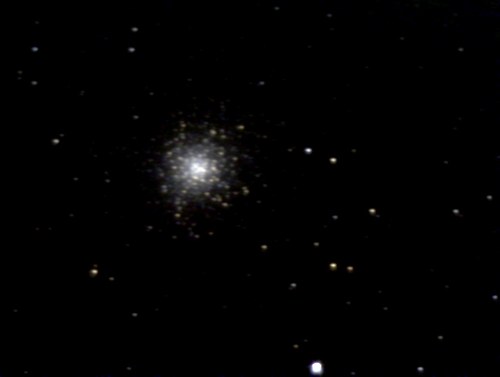
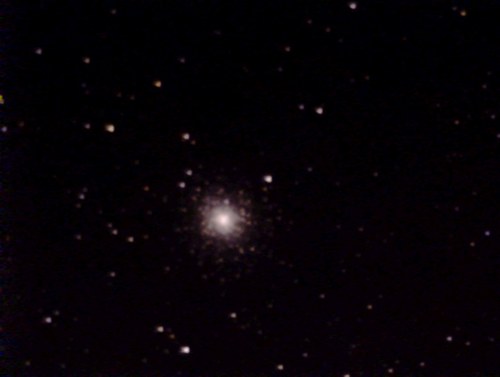
Since viewing was simply the best I've had all summer, I just had to take one more photo before I went to bed and so I chose my old favorite, M13 - the Great Globular Cluster in Hercules. It's easy to find, bright and shows up well. Using what I've learned this evening on my previous two Messier Objects, I took 83 8 second photos for a total time of 11 minutes 4 seconds and I wound up with the most detailed picture of M13 that I've taken yet.

This night has been absolutely magical.

The Dumbbell Nebula

Filed under: astronomy, Astrophotography, Messier Objects, Observation Journal — Tags: M27 — Ed @ 11:49 pm


M27-Dumbell Nebula on 9/20/07

This image was made from the best 100 8 second exposures (out of 150 total) resulting an a total exposure time of 13 minutes 20 seconds. It is the longest exposure I've ever done and the detail is way beyond what I expected. The Dumbbell Nebula (M27) is a planetary nebula. Planetary Nebulae are so named because they look like giant planets through a telescope. In reality they are the gas and dust remnants of a star that has exploded.

I was really happy with the Ring Nebula image earlier, but I think I may be even happier with this one. I'm starting to see how big a difference it can make having a huge number of exposures - there's a ton more detail in the image.

The Ring Nebula

Filed under: astronomy, Astrophotography, Messier Objects, Observation Journal — Tags: M57 — Ed @ 11:26 pm


M57-The Ring Nebula on 9/20/07

It was quite cloudy this evening, but all of a sudden around 10 the clouds started to dissapate and I was able to resume my imaging. The Ring Nebula (M57) is one of the most beautiful sights for a telescope. I had never imaged it before, but had it on my list for this evening. I pointed the scope to where I believed it should be and it seemed to jump off the screen at me. I'm still in my driveway and am having great luck with several other Messier Objects. I'll post those in a few minutes.

Update: Here is a version using my 3X Barlow to get a bit more detail on the Nebula (note that the image below is rotated 90 degrees or so - I just inserted my camera into the focuser at a different angle):

M57-The Ring Nebula on 9/21/07
M57-The Ring Nebula Detail View

The Moon on a cloudy night

Filed under: astronomy, Astrophotography, Clouds, Moon, Observation Journal — Ed @ 9:49 pm


The Moon on 9/20/07

There are lots of thick clouds out right now, which is really obscuring the view, but I was able to get this shot of the moon in-between the clouds. You can see the Copernicus Crater standing in stark relief at the bottom of the image. Also notice the difference in which craters are illuminated and which are in shadow - how different it is from yesterday's image of the moon.

I'm hoping things clear up in a bit, but if not, I may actually get some sleep this evening.

Making a Hartmann Mask

Filed under: astronomy, Equipment — Ed @ 6:37 pm

Back on the 8th of September, I mentioned that I had made a Hartmann Mask to aid in focusing. I did this at the suggestion of Andrew who had pointed me to these instructions. Here's how I made it:

Using the telescope cover to trace the circle for a Hartmann Mask

First, I got a piece of cardboard and traced a circle around my telescope end cap. I then used a utility knife to cut around this circle. After cutting around this circle, I cut two smaller circles on opposite sides of the disc I had made. Next I created two long straight pieces that together were longer than the circumference and taped them together.
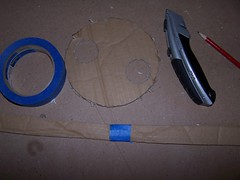
The pieces of the Hartmann Mask

Next, I taped the long piece around the disk and covered it in tape to attach everything firmly and to make it look stylish. This is the result:
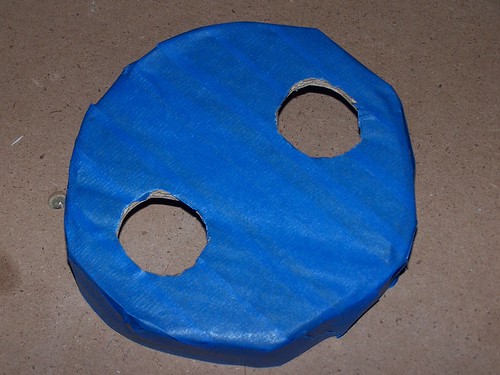
A finished Hartmann Mask

The Hartmann Mask on my telescope

Once I've got it attached, I will get an object in focus in the telescope and then put the mask on the top of the telescope (this works best with brighter objects). The view will dim noticably (I'm covering most of the aperature) and if it's not quite in focus, I'll see two copies of each star or planet. I then adjust the focuser slightly until the two images merge into one.

Hartmann mask focus example
Hartmann Mask effect viewed through the telescope
Out of focus (left), In focus (right)

That's it! This is a significant boon to focusing when using the 35mm DSLR since it's very hard to see through the viewer, but also can help with webcams and astrocams (like my Deep Sky Imager).
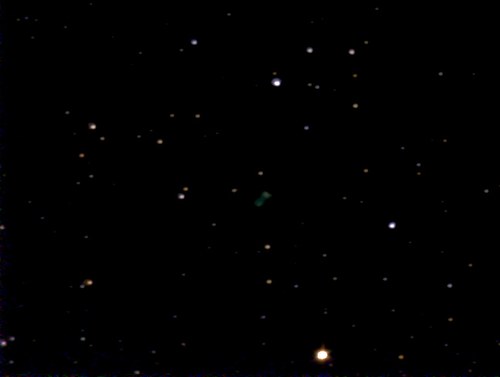
My first shot of M2

Filed under: astronomy, Astrophotography, Messier Objects, Observation Journal — Tags: M2 — Ed @ 12:51 am


M2 on 9/19/07

This image of M2 is the first I've gotten and is also the longest image I've taken. At over 480 seconds it was a full 8 minutes of exposure time. I didn't really mean to take an exposure for that long, but I was helping Dave (who came by this evening) with his telescope and camera and I just left it running while I did that. When I came back I found that it had stacked over 60 8 second images and it looked pretty good to me. My next target was the Ring Nebula, but right after I found it, my tracking motor's batteries conked out. Ah well... I'll just have to get a plug-in adapter instead so I can run it off my extension cord I've started using for my laptop.

Well, it's really late so I need to head off to bed. I hope you've enjoyed the show.

September 19, 2007

Uranus continues to wander

Filed under: astronomy, Astrophotography, Observation Journal, Planets, Uranus — Ed @ 11:45 pm


Uranus from 9/15 to 9/19/07

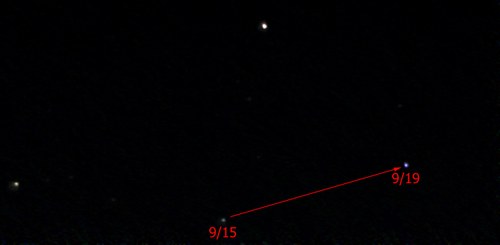
It took me a while to find Uranus this evening, but once I did I was able to take another picture using the Kernel Filter method with my DSI. This preserves the blue color that you can see even through the eyepiece. I've superimposed this evening's image over the one I took on the 15th to show the movement of the planet. I removed yesterday's overlay because it was so overexposed. If I get a shot tomorrow night, I'll add it to this image. Anyway, I think it's fun to see how the planet moves through the sky.