Happy New Year 2009!
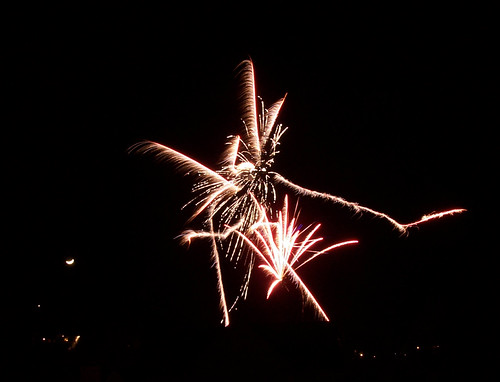
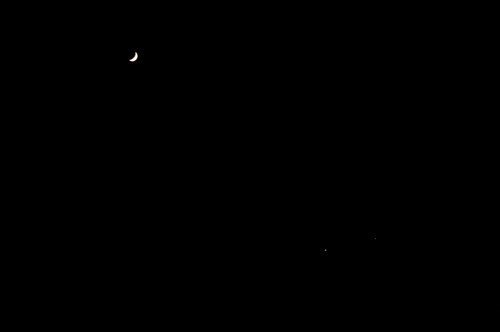
My neighbors are shooting off fireworks this evening and in this image, you can see the Moon and Venus in the bottom left of the image.
Astronomical observations by a guy in Flintstone, Georgia
My neighbors are shooting off fireworks this evening and in this image, you can see the Moon and Venus in the bottom left of the image.
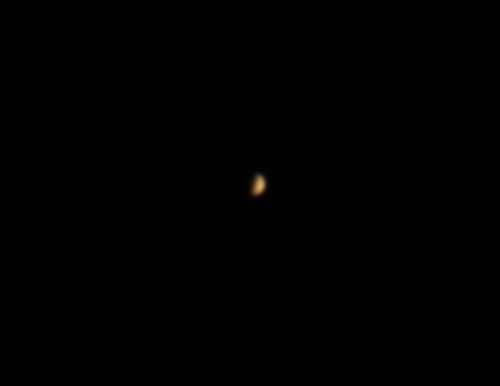
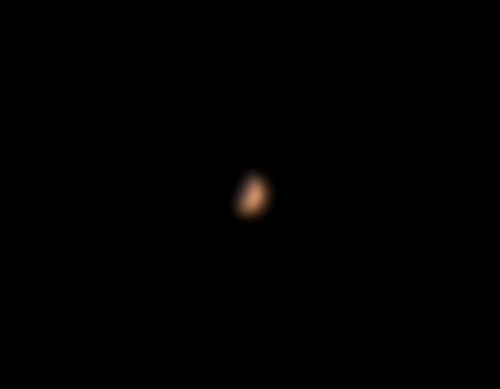
Venus is pretty much a "quarter moon" now and getting larger in the scope. It was very close to the Moon this evening.
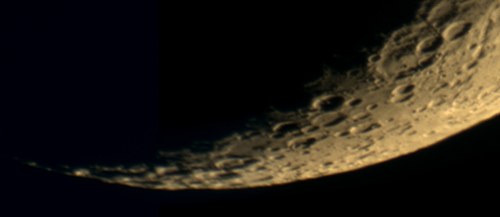
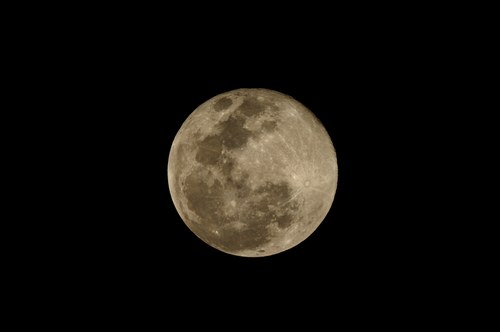
Speaking of the Moon, I also got a detailed shot of the lower limb of the Moon:
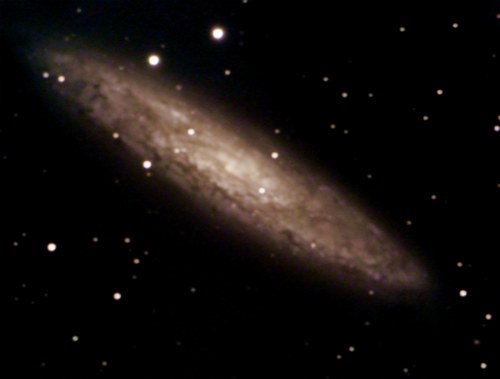
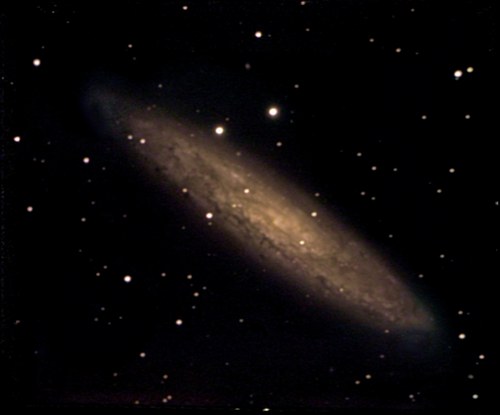
Tonight I continued to add to the total imaging time on C65 - The Sculptor Galaxy. This is really a neat target to image, particularly now that I've got autoguiding working well. Unfortunately, tonight was a bit windy, which meant that I could only do 1 minute sub-images. I'm hoping to have a bit less wind in the next couple of days so that I can get some really long exposures.
Venus is quite high now in the evening sky and very, very bright. It's also starting to clearly show phases. According to Sky and Telescope, it should be a massive crescent in February - bigger than my largest images of Jupiter. Unfortunately, because of the dense clouds on the planet and it's extreme brightness, there's no way for me to get any images with detail of the planet or its clouds. I've seen some Venus filters that supposedly can show some detail, but I don't believe my equipment is good enough for that to really matter.
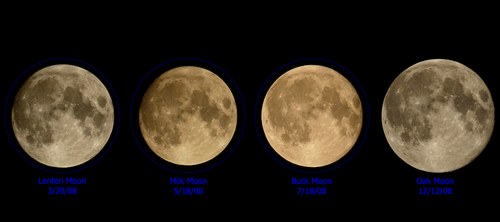
Tonight's full Moon, as many have heard on the news today, is the largest apparent view of the full Moon this year (and for a while). Of course the actual size of the Moon has not changed, it's just at its closest point to the Earth for a while. To illustrate how much of a difference this makes, I've put together the following comparison:
The image above compares my images of the full (or nearly full) Moon from three other dates in 2008 (3/20, 5/18 - full on the 20th, 7/20) with the full Moon from tonight. Each of these images was taken with my Nikon D50 through my LXD75 8" Schmidt-Newtonian, so they are all on the exact same equipment and you can see the difference tonight is noticable, but not massive - it is not noticible to me visually, or even through my telescope.
That said, it did look beautiful in the cold skies this evening.
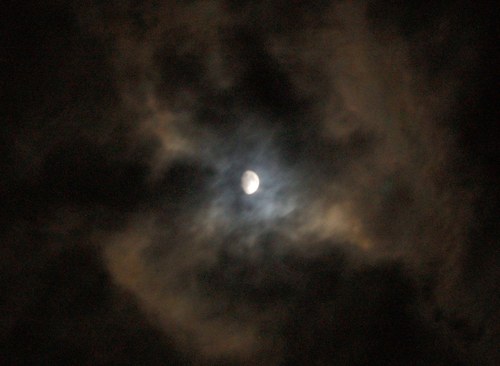
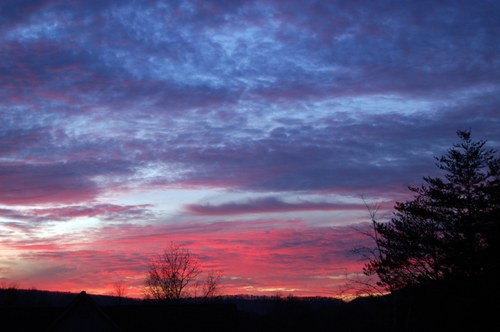
Tonight, with the clouds covering the majority of the sky, was not a great night for star gazing. There was a neat sort of moonbow effect though. You can sort of see it in the image above. The clouds refracted the light from the Moon into a bit of a rainbow. There was also a nice sunset (because of the clouds, of course):
At scouts this evening, I took a telescope and binoculars to let the boys (and their parents) see the Moon. Even through clouds, she looked great in the scope and I think everyone thought it was neat. And, of course, it completed the Astronomy badges we've been working on! So all around, a good night even though I won't be getting any more imaging done.
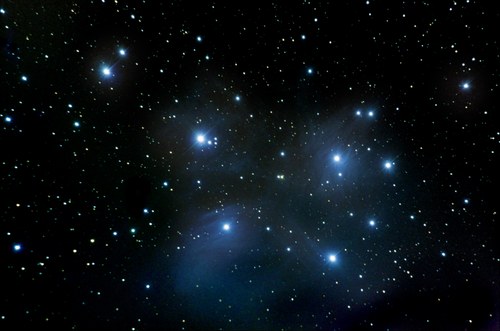
It's getting very cold out, but that also means clear viewing. With my autoguiding setup, I've been able to begin getting some long exposure astrophotography and tonight, I aimed the camera at the Pleiades - M45. Right now, they are almost directly overhead around 10pm and they are just a wonderful target to look at with the naked eye, binoculars or a telescope. Through my large scope, I can see a hint of the nebulosity surrounding this open cluster, particularly the Merope Nebula (which I captured with a different camera a couple days ago), though it's tough because of the brightness of the stars always be sure. With the camera, there's no mistaking it. It looks like a painter took some blue paint and spread it around the cluster, leaving brush strokes. It's a beautiful sight.
It's great to be observing and imaging again.
Okay, as I said in a previous post, I'm not too into conjunctions. They're kind of neat, I guess, but they don't get me too excited. That said, I figured with the nice clear skies we're having this evening I should get a shot of the conjunction of the Moon, Venus and Jupiter even though they were closest the past two days. I was still able to get them all in-frame on this shot and zoom in just a bit with the camera, I think with the motion of the Moon, that by tomorrow, the three of them probably won't fit in the same frame. It's amazing to me how quickly Jupiter has been moving compared to Venus lately. It seems like just a couple weeks ago it was well above Venus, but now it's actually slightly below it in the sky. It'll soon leave the night sky altogether and I'll be left with only Venus in the night sky for a while.
Oh and by the way this guy has a great shot from 2 days ago - the planets and the Moon almost look like a smiley face.
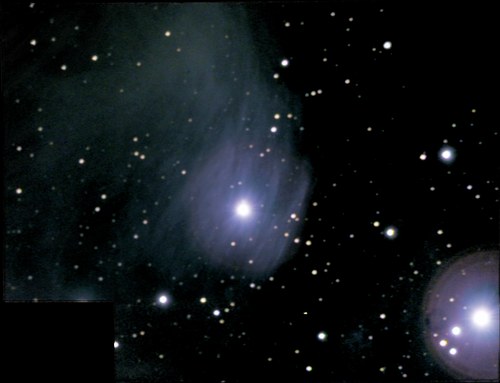
Merope is one of the stars of the Pleiades and has a nice nebula around it known as The Merope Nebula. In the bottom right of this image is another of the Pleiades, Alcyone, which is the brightest of the seven sisters.
Here's the Sculptor Galaxy image I was working on this evening - over an hour of image data on this wonderful object found in the constellation Sculptor. It's really one of my favorite targets for my camera. Through the eyepiece, it's easily visible as a cigar-shaped smudge, but I can't make out much, if any, detail.
I'm now working on an image of Merope one of the stars of the Pleiades which has a wonderful nebula around it. I'll post that next.