Sunset on 10/19/08
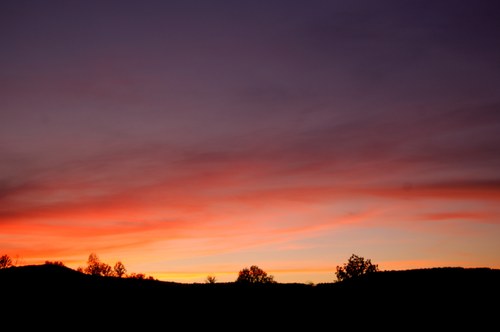
The pretty sunset means no stargazing tonight.
Astronomical observations by a guy in Flintstone, Georgia
The pretty sunset means no stargazing tonight.
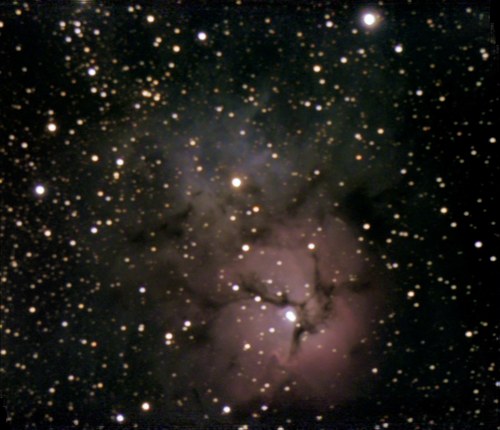
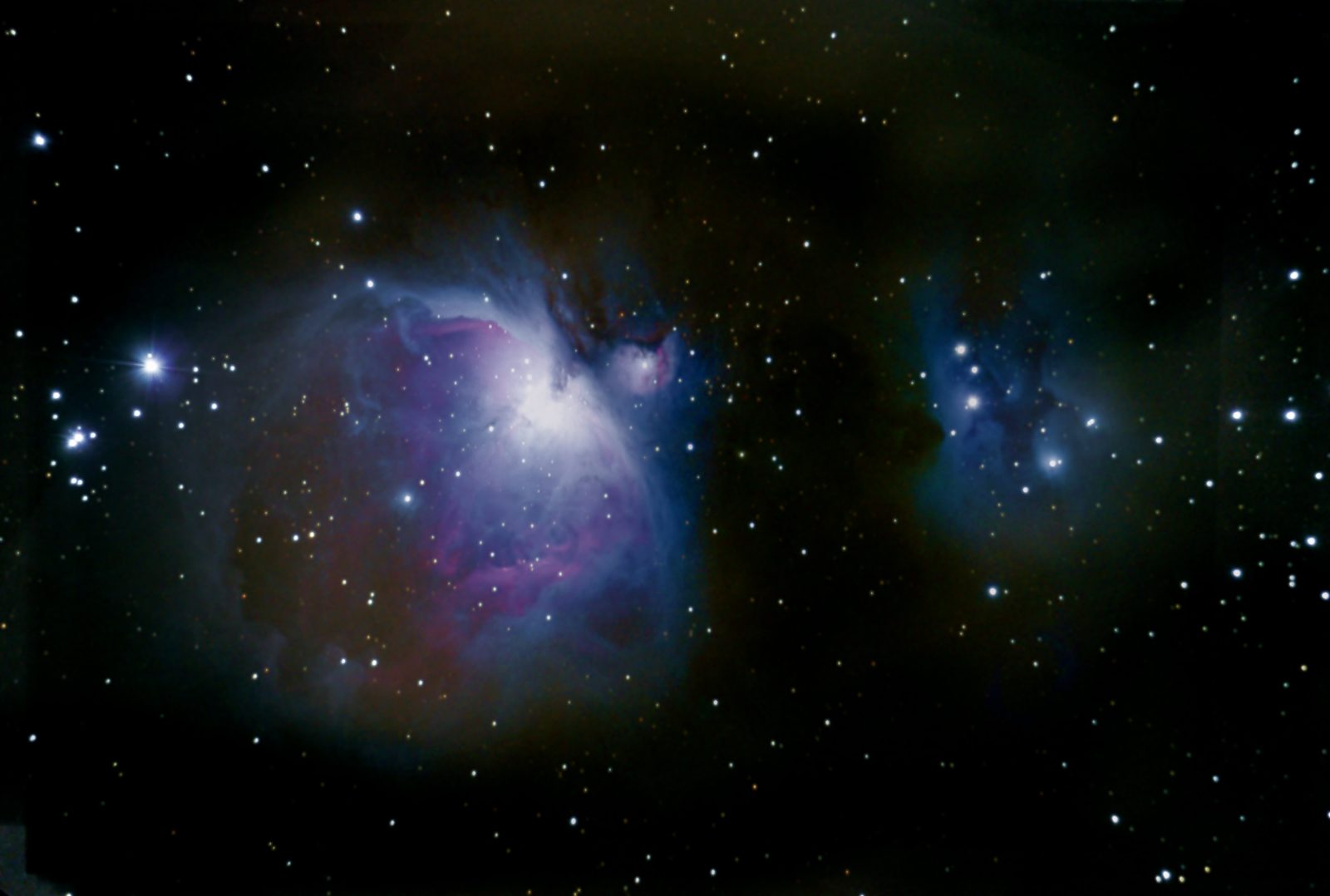
I've been very busy on the few nights that have been clear lately, so it's been almost 3 weeks since I last posted an image. It's getting cold out which is a mixed blessing. I get very cold in my driveway, but my camera operates better and the atmosphere is generally better for astrophotography. The image above is about an hour of exposure time made up of 1 minute exposures. I'm using autoguiding using PHD Guiding, which works super well to allow me to get subs that long. I think I'll need to take apart my mount and readjust some things - the north-south backlash is huge and if I get that tuned, it'll guide better. Anyway, it's nice to be imaging again.
Tonight, as we drove into St. Louis (for my 20th high school reunion), as we turned onto 44, near the Arch (so with a huge amount of light polution) I saw the most amazing fireball I've ever seen. It was easily as bright as the Moon and looked like it was headed almost straight down - like it would land in south St. Louis somewhere. Both my wife and I saw it - it was absolutely spectacular from mag 1 skies. I can't imagine what it would have looked like from dark skies. It was beautiful.
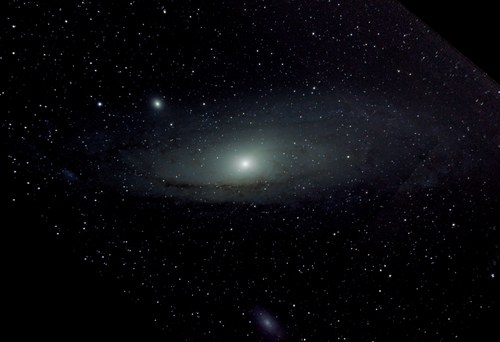
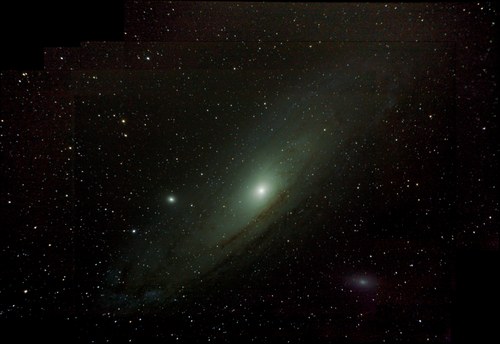
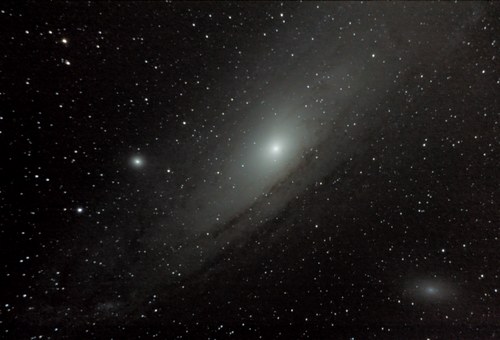
I wasn't really happy with the way Andromeda turned out the other night so I reprocessed it yesterday. Unfortunately, I've been to busy in the evenings to get out the past few days and I'm not sure I'll have the change again for a bit. Too bad - it's been pretty nice.
I'm not super happy with the processing on this, but I was very happy with the number of images I got this evening. The sky has been absolutely stunning the past couple nights. The only problem now is that it's getting cold, even with my layers, I was a bit chilly. Still, it's nice too be viewing the familiar Fall sky again.
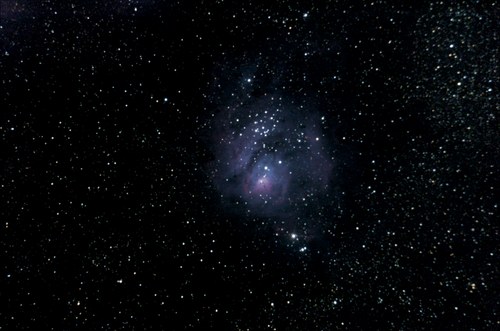
It's been cloudy for several days and I haven't been able to get out until tonight. It was really nice, clear and dark, but started to get windy about the time my Nikon camera battery gave out so I called it a night. This is really the only image I got - the Lagoon Nebula. Unfortunately, the IR filter on the D50 blocks out a lot of the Hydrogen Alpha light which normally makes this very red in color (though you can see a bit of that). It's a big nebula found in Sagittarius. I've still got coma going on, particularly in the right side of the image. I'm trying to figure out if I can take care of that without spending anything by just collimation and alignment. We'll see...
This is the first shot of Andromeda I've gotten from the D50 with my 8" scope. And I didn't realize how big the thing was. I'm going to have to go back and get more frames to get the whole thing in the shot! What a difference autoguiding makes, allowing me to take shots of 5-6 minutes. Well, it's really late, so I'm headed to bed now...
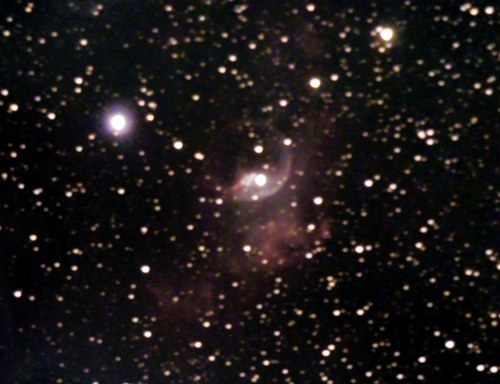
The Bubble Nebula is a faint target that I was able to capture now that I'm using autoguiding. By using PHD Guiding (Push Here Dummy Guiding) I'm now able to take exposure 2 minutes long (or longer in some cases). This allowed me to get a ton more detail than I was ever able to before. I didn't even have very good alignment this evening, but the autoguider takes care of that! I'm getting one more target and then I'll be calling it an evening. Overall, a very exciting evening.
Tonight was pretty clear with moderate seeing conditions. I decided to get out and try out some autoguiding. This evening I used both PHD Guiding and Envisage's built-in guiding. PHD is better by far. I have yet to see if I can guide with PHD and capture with Envisage (with different cameras) at the same time. I hope so.
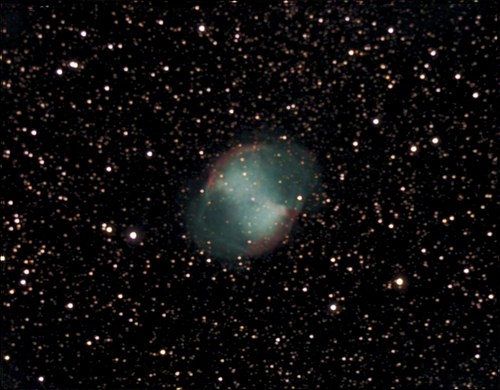
Anyway, the M27-Dumbbell Nebula above is from my Envisage guiding. It allowed me to take 1 minute sub-images to build this one. I even had a couple successful 2 minute subs, but they weren't reliable enough to stack on so I just stuck with 1 minute. The result is my best M27 shot yet - lots more detail on the filaments that make up this beautiful planetary nebula. I'm excited about being able to start using what I've learned about drift alignment along with autoguiding to start creating some extremely long duration images. If I can ever get to 10 minute subs, I will have really arrived and I don't think I'm that far away... Note that if you zoom in (click on the image to be able to see other sizes) there's a lot more detail than in previous versions.
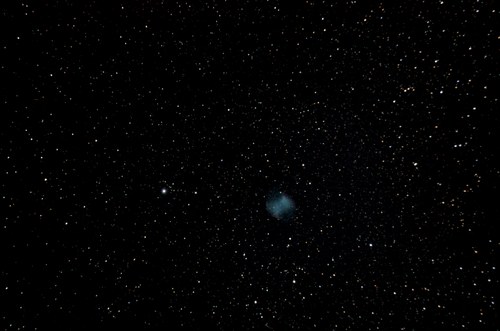
I'm trying out more widefield shots with the D50 lately. Tonight, though, the Moon really washed things out, but I still got a reasonable shot throught the D50. I used PHD Guiding to autoguide and it seemed to work really well. The biggest issue I have with this image is that it appears that I've got a bit of coma going on. Normally the Schmidt-Newtonian's are thought to have a pretty flat field, but that doesn't appear the case in this image, anyway.