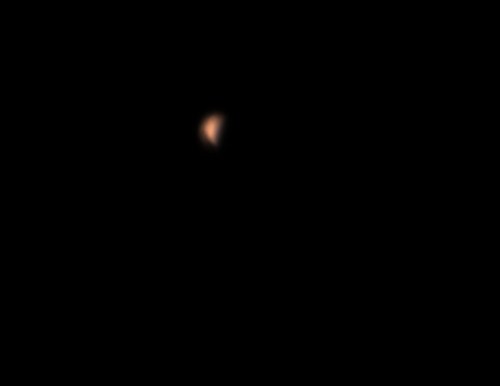
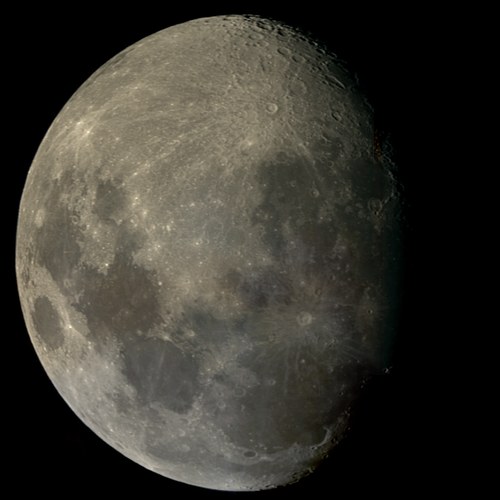
The Moon on 1/30/09
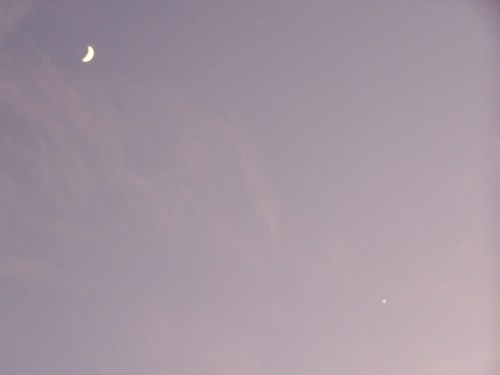
Tonight's Moon was really pretty, hovering above Venus in the west.
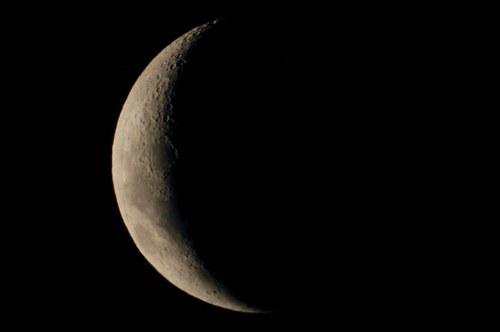
Here's yesterday's Moon:
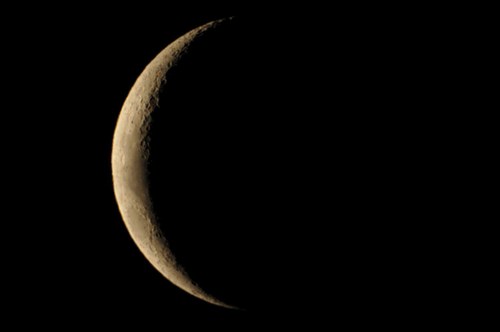
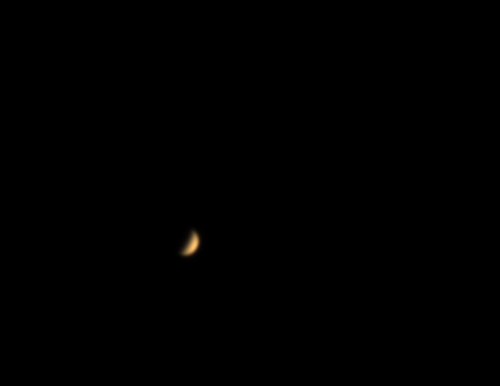
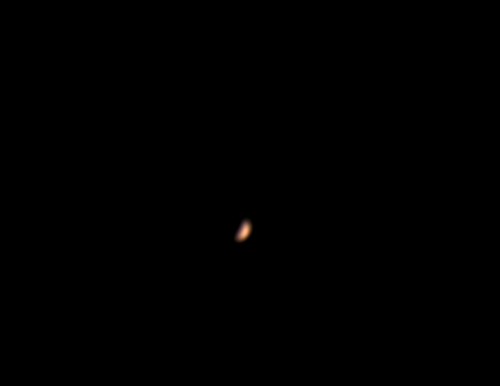
And here's Venus:
Astronomical observations by a guy in Flintstone, Georgia
Tonight's Moon was really pretty, hovering above Venus in the west.
Here's yesterday's Moon:
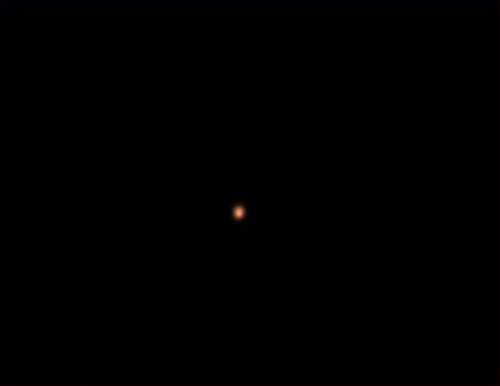
And here's Venus:
Via slashdot, via instapundit, I was directed to the following video of an amazing tour of the International Space Station done by astronaut Mike Fincke. It's really amazing how large the station is. It's also amazing how full of junk it is. Watching this makes me think seriously about what would I would need to do to become an astronaut (either that, or earn $25 million) just so I could visit the ISS.
Here it is, in 4 parts:
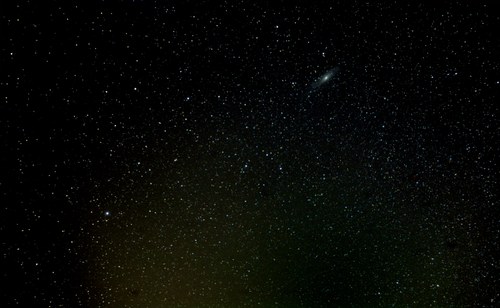
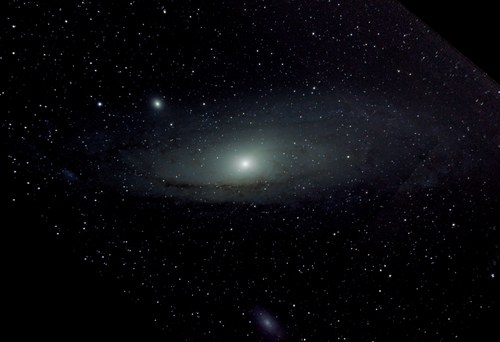
Tonight I took a bunch of widefield shots tonight of part of the Andromeda constellation - you can see M31 - the Andromeda Galaxy in the upper right. For comparison, the image below is of the Andromeda galaxy through my 8" telescope. It was taken a couple months ago.
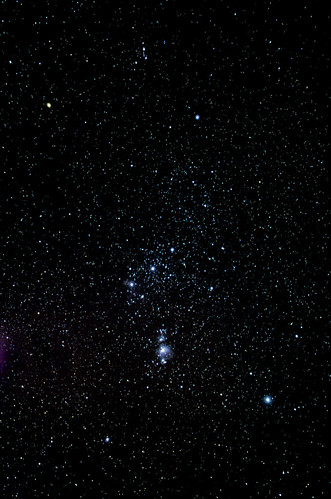
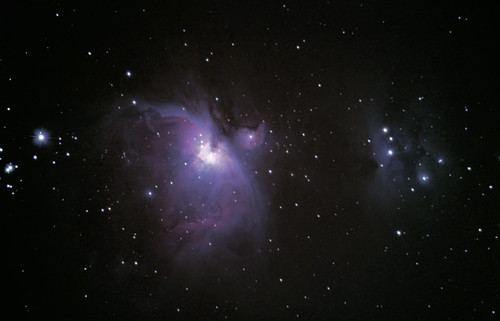
It's quite cold out, but also very, very clear. I decided to try out my new camera mount and see if I could get some widefield shots with my D50 camera. I had time for two before the battery gave out (note to self: charge the D50 battery more often). The two images are at the same scale - the one above is of the constellation Orion (at least the better known part - it leaves out his bow). you can see M42 - The Great Orion Nebula in the lower part of the image and I think I can barely make out the Flame Nebula near the belt.
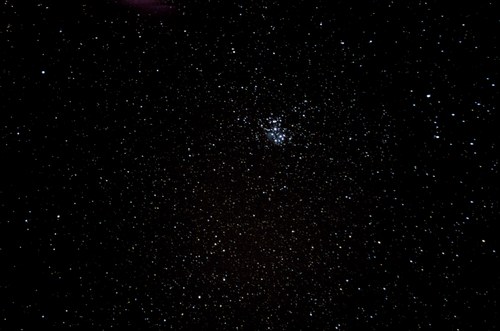
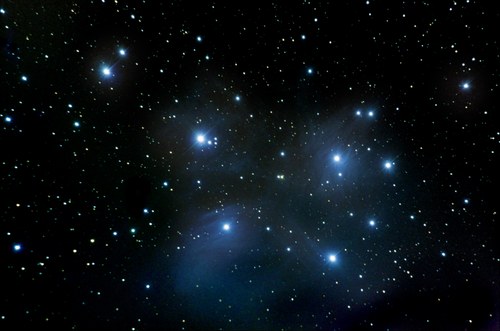
Below is the other shot I took, of M45 - The Pleiades. You can see a hint of the nebulosity in that image, particularly if you look at the zoomed in view. Also note in both images how many stars are in the background.
I've been interested in doing wide-field astrophotography for a while, so today, I made an adapter that will allow me to mount a camera on my old equitorial mount that came with my first telescope. This way, I can take really long exposures that have a huge field of view. This is a great way to get shots of the Milky Way, for example. It looks like it'll probably be cloudy tonight, but as soon as I've got some good weather, I'll get some images. Another good thing about this is that setup will only take a couple minutes and so it's something I'll be able to do even if I only have a couple minutes of viewing time.
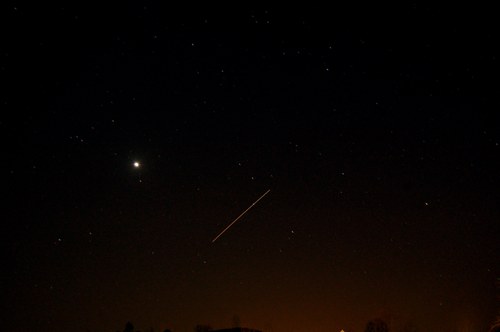
It's super chilly out, but I was able to snag this shot of the ISS passing overhead. That's Venus to the left.
It turns out that it's too cold for my laptop out here, so I'm going to head inside. I wasn't really planning on this being the coldest night of the year... :)
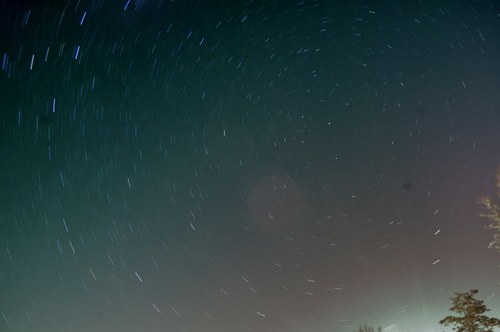
Update: I set up the D50 DSLR on the tripod and took a star trails shot:
I'd like to welcome anyone and everyone who has come here from the 365 Days of Astronomy Podcast. Welcome to my regular readers as well - today I've got the featured podcast on that site, which is part of the International Year of Astronomy activities - it's a podcast on astronomy every day of this year and I've got the 15th (or thereabouts) of every month. It's a new effort for me - my first podcast - and I had a really good time putting it together. In the podcast, I'm talking about planning your observing sessions. Anyway - take a look, if you haven't already seen it.
If you're looking to plan your observing session as discussed in the podcast, let's start here:
I use http://www.weather.com to start with and then proceed to http://www.cleardarksky.com/ where I look at the Walker County Observatory sky chart since that's my county. You should find the closest observatory to your location and check out the conditions. While these charts aren't perfect, they are generally very good, at least for my location.
The Weather Channel is telling me right now that it should be clear and very cold, also probably too windy for imaging - maybe too windy for observing (I get nervous at anything above 10mph - I really don't want my scope to fall over). Clear Dark Sky is telling me it should be clear and dark but seeing might not be so good - I'm not 100% sure why, but that's what it's telling me.
Let's start here: http://www.skyandtelescope.com/observing/ataglance - the Sky & Telescope folks highlight interesting sights night by night here. For the 15th, they just mention that Vega (a summer star) is still visible here in winter. Nothing significant is mentioned for that day.
Let's look for the International Space Station (ISS) here: http://www.heavens-above.com. To start with, I need to log myself on to pull up my location (this is very location dependant - make sure you select your location). Once I've done that, I click on "ISS". Cool! It looks like I'll get 2 ISS passes here in north Georgia - one at 6:27pm and one at 8:00pm. I'll keep my eye out and maybe see if I can get an image.
Here is my list of targets for the night:
Mercury - I'll have to be really quick about this - it'll be low on the horizon immediately after sunset. I'll probably only be able to see it in binoculars. Here's an image I got on the 7th of January:
Venus - This is high in the southwestern sky and unmistakable - it's the brightest thing visible in the night sky right now (other than the Moon, which won't rise until much later). It should be clearly a quarter moon tending toward a crescent in your scope - adding a bit of magnification with a Barlow or shorter focal length eyepiece will help you see that even better. Here's an image I got on the 14th of this month:
Now we're going to head off to look at some deep sky stuff - stuff that's not in our solar system.
M45 - The Pleiades (also known as The Seven Sisters). This is a wonderful sight in a scope and is easy to find. It's nearly overhead (just a bit east of straight up) after dark and is easy to spot in the scope. With a telescope you can see many more stars in this cluster than you can with the naked eye. With the camera (or a large scope) you can see nebulosity or cloudiness around the stars in this cluster.
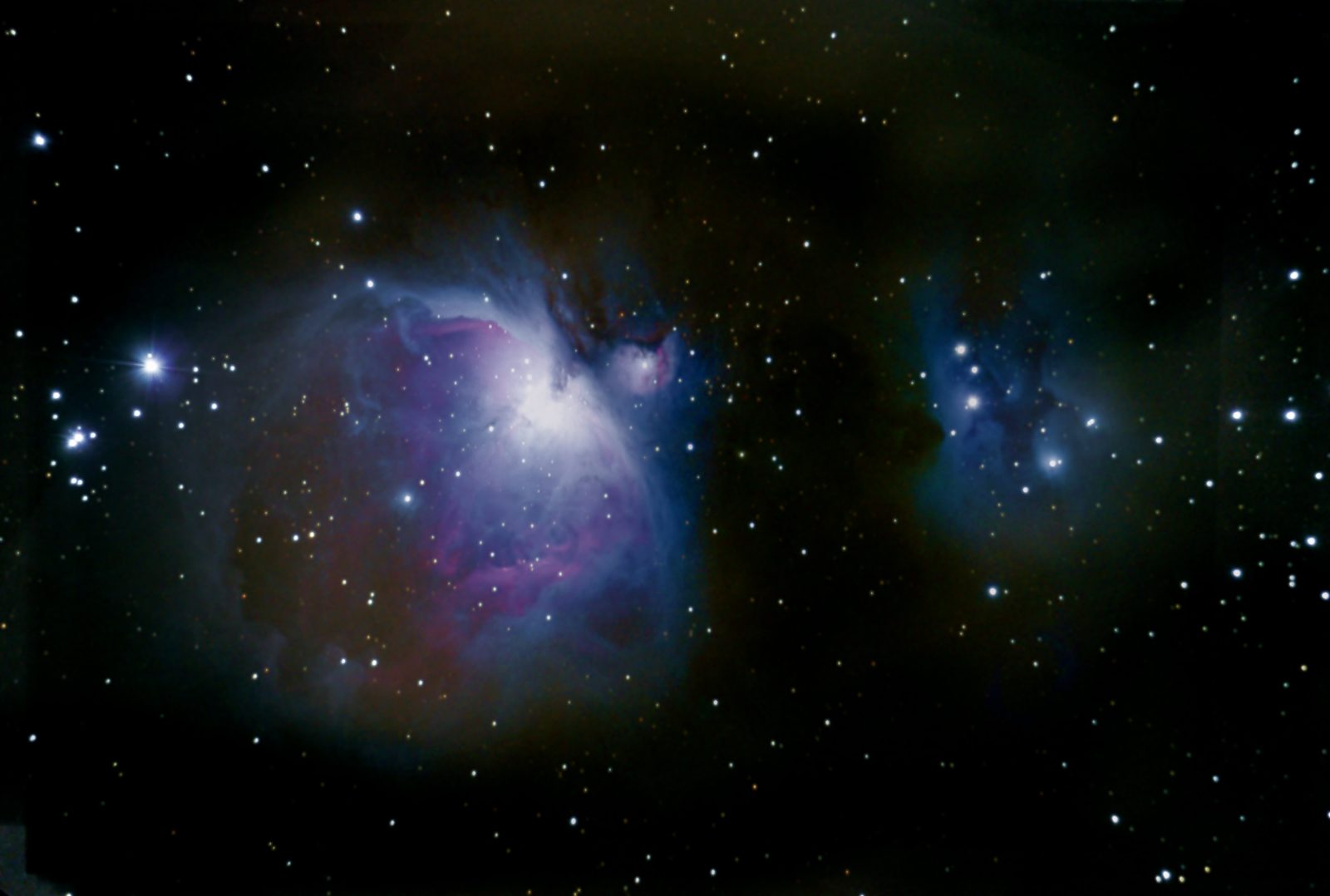
M42 - The Great Orion Nebula. This is maybe the best deep sky object in the sky - it's beautiful in any scope or even in binoculars. You should be able to not only see the stars in this nebula, but much of the nebula as well. When I see it in my scope, it looks like it has a tinge of green, but in reality is mostly blue and red.
Now these images of the deep sky stuff are not what you'll see through your scope, so don't get discouraged. That said, Venus will probably actually look better than my image. I don't have a great setup for imaging planets. I hope you've enjoyed the podcast and will continue to tune in in the future.
Clear Skies!
This is the only shot I was able to get this evening before the clouds moved in. Venus continues to shine brightly, high in the evening sky, and is getting larger each night in the scope as it continues to wane - it's just now passing the quarter phase and is starting to become a waning crescent.
It's been so rainy and cloudy that I haven't had the scope out since the first of the year. Today the clouds pretty much went away and I set up the scope. Because of the brightness of the Moon and the light wind, I decided to get images of just bright stuff. The first item on my list was Mercury which is the higher of the two planets visible in the west just after sunset. Mercury through the scope looked like it was a quarter moon shape, though it was hard to tell through all of its wavering in the atmosphere. It really doesn't show up that well in this image either, but it's nice to bag it when I can.
Next up was Venus. Venus is clearly a half-moon now and will shortly start showing a crescent. It's much more interesting in the scope than Mercury because it's higher in the sky so it wavers less and it's much larger so its shape is much clearer.
Finally I started imaging the Moon which is very bright this evening. While getting the images for this picture, the wind started blowing fiercely and I began to worry about the stability of my scope so as soon as I finished the image, I took everything down. Hopefully tomorrow will be clear as well, but a lot less windy.
Today, I glanced up and happened to see the Moon. What I didn't expect was that I would be able to see Venus as well, during the daytime. Pretty cool. Unfortunately, the image is a bit out of focus...
I spent a lot of the day working on my scope. One of the gears on my electric focuser came loose, so I fixed that. I also disassembled my mount, regreased and re-set the right ascension axis and re-fit the gears in the declination axis. Afterward, I realigned the mount's polar scope and retrained the drive motors, so it's a bit disappointing that the sky is cloudy this evening because I'd like to check out the improvements. When I was testing and aligning this afternoon, everything was silky smooth, so I'm expecting great things, particularly regarding autoguiding.