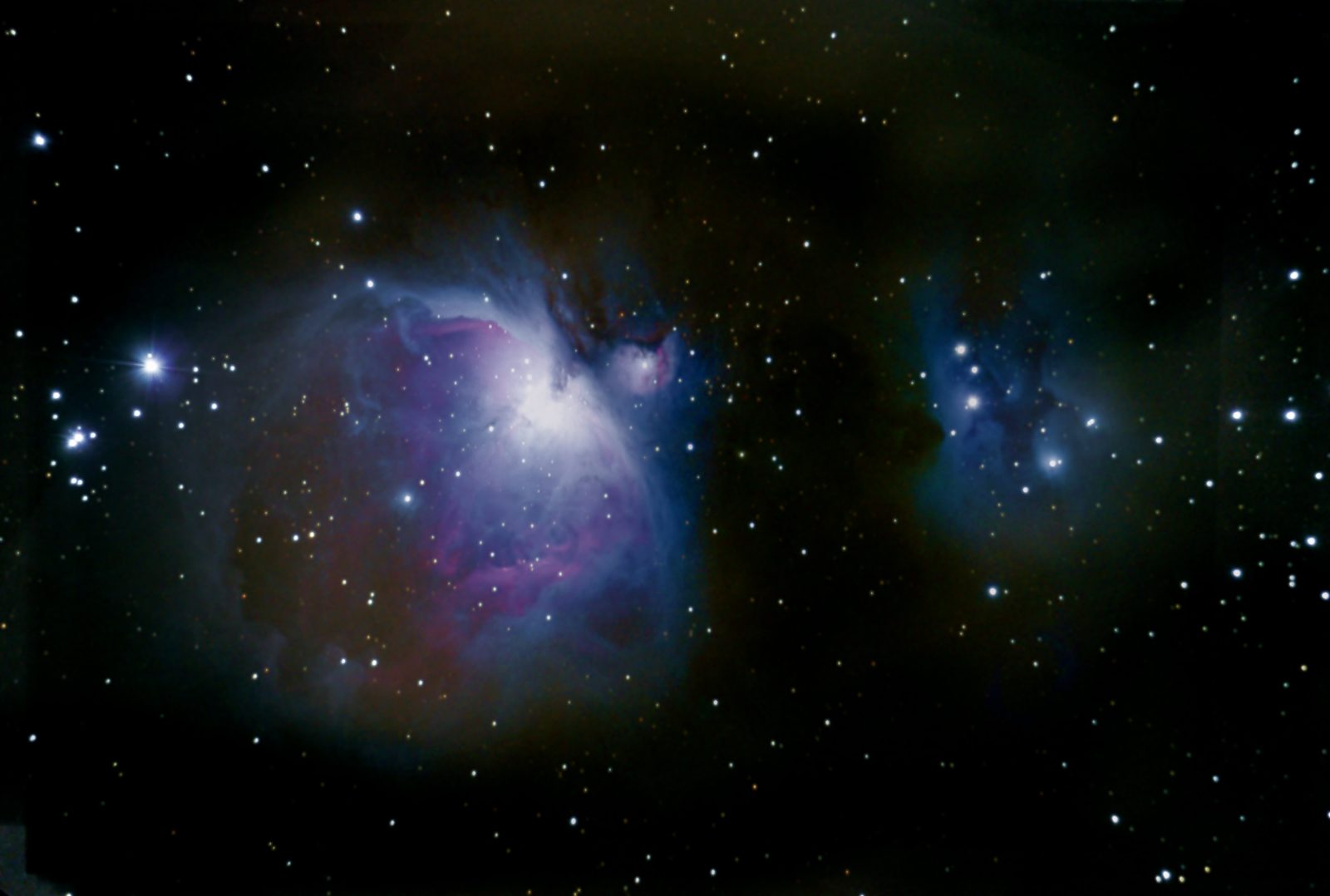
The Great Orion Nebula (M42) and the Running Man Nebula, photographed from Flintstone, Georgia

Flintstone Stargazing

Astronomical observations by a guy in Flintstone, Georgia

M42 – the Great Orion Nebula, February 2009

October 2, 2008

Great Worldwide Star Count coming up!

Filed under: astronomy — Tags: family, for kids, fun, Great Worldwide Star Count, kids, worthwhile — Ed @ 8:58 am

Last year, my kids and I participated in the Great Worldwide Star count. It was fun and educational for the kids to observe how many stars they were able to see from our yard and our observations helped the cause of Science!

This year's star count is from October 20 - November 3. I'm planning on participating again and would highly recommend it to everyone. If you are interested, go here to find out more. It's easy, takes only about a half an hour and benefits science. Your observations are put together with others in order to create more detailed light polution maps.

I'll be posting more reminders as the event comes closer, but would encourage everyone to participate. It does not require a dark sky, telescope, binoculars, or knowledge of the night sky. All it requires is at least one good eye (with eyeglasses is fine), a little bit of time and the sky. Basically you go outside between 7-9pm wait a few minutes to let your eyes (or eye) adjust to the darkness, then look up and find cygnus (which is easy and they give you a chart), you figure out which of their 7 images looks most like what you see and then you record that online. If you're able to do that on several different nights during that time, that's great and even better if you can do it from several locations. Last year I posted several entries from Flintstone, Georgia but also posted an entry from downtown Chattanooga (really bad light polution). All of this data is combined to help create better light polution maps.
September 28, 2008

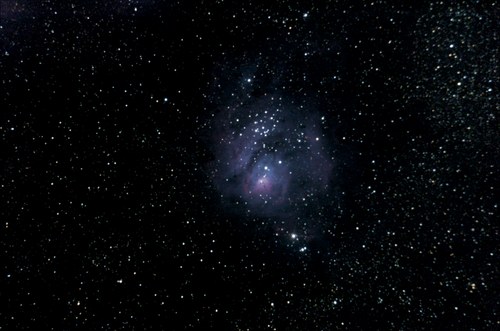
M8-Lagoon Nebula on 9/28/08

Filed under: astronomy, Astrophotography, Messier Objects, Observation Journal — Tags: M8 — Ed @ 11:52 pm

It's been cloudy for several days and I haven't been able to get out until tonight. It was really nice, clear and dark, but started to get windy about the time my Nikon camera battery gave out so I called it a night. This is really the only image I got - the Lagoon Nebula. Unfortunately, the IR filter on the D50 blocks out a lot of the Hydrogen Alpha light which normally makes this very red in color (though you can see a bit of that). It's a big nebula found in Sagittarius. I've still got coma going on, particularly in the right side of the image. I'm trying to figure out if I can take care of that without spending anything by just collimation and alignment. We'll see...

September 25, 2008

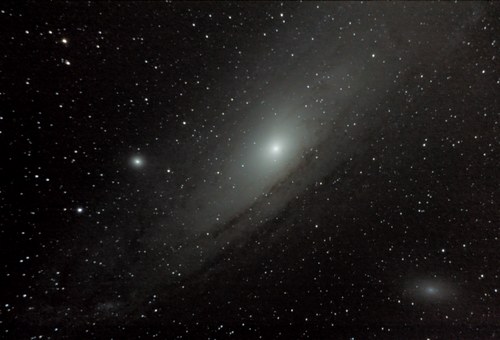
M31-Andromeda Galaxy on 9/24/08

Filed under: astronomy, Astrophotography, Messier Objects, Observation Journal — Tags: M110, M31, M32 — Ed @ 2:01 am

This is the first shot of Andromeda I've gotten from the D50 with my 8" scope. And I didn't realize how big the thing was. I'm going to have to go back and get more frames to get the whole thing in the shot! What a difference autoguiding makes, allowing me to take shots of 5-6 minutes. Well, it's really late, so I'm headed to bed now...

September 23, 2008

C11-Bubble Nebula on 9/22/08

Filed under: astronomy, Astrophotography, Caldwell Object, Observation Journal — Tags: C11 — Ed @ 12:18 am

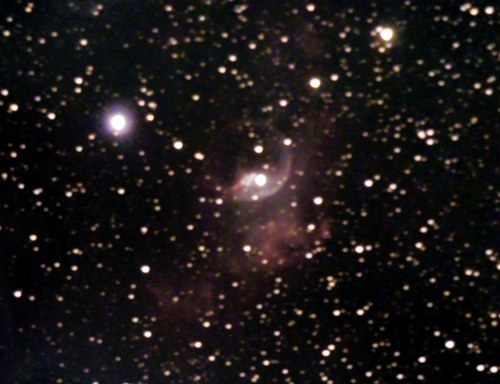
The Bubble Nebula is a faint target that I was able to capture now that I'm using autoguiding. By using PHD Guiding (Push Here Dummy Guiding) I'm now able to take exposure 2 minutes long (or longer in some cases). This allowed me to get a ton more detail than I was ever able to before. I didn't even have very good alignment this evening, but the autoguider takes care of that! I'm getting one more target and then I'll be calling it an evening. Overall, a very exciting evening.

September 22, 2008

First clear night in forever...

Filed under: astronomy, Astrophotography, Messier Objects, Observation Journal — Tags: M27 — Ed @ 12:20 am

Tonight was pretty clear with moderate seeing conditions. I decided to get out and try out some autoguiding. This evening I used both PHD Guiding and Envisage's built-in guiding. PHD is better by far. I have yet to see if I can guide with PHD and capture with Envisage (with different cameras) at the same time. I hope so.

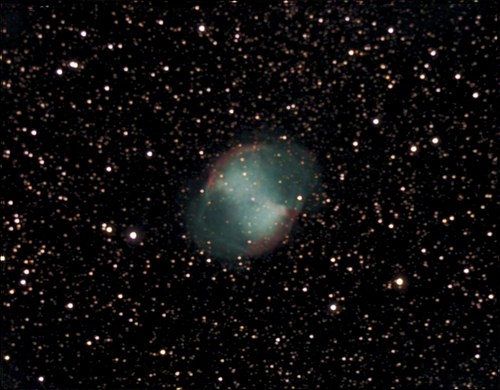
Anyway, the M27-Dumbbell Nebula above is from my Envisage guiding. It allowed me to take 1 minute sub-images to build this one. I even had a couple successful 2 minute subs, but they weren't reliable enough to stack on so I just stuck with 1 minute. The result is my best M27 shot yet - lots more detail on the filaments that make up this beautiful planetary nebula. I'm excited about being able to start using what I've learned about drift alignment along with autoguiding to start creating some extremely long duration images. If I can ever get to 10 minute subs, I will have really arrived and I don't think I'm that far away... Note that if you zoom in (click on the image to be able to see other sizes) there's a lot more detail than in previous versions.

September 11, 2008

M27-Dumbbell Nebula on 9/11/08

Filed under: astronomy, Astrophotography, Messier Objects, Observation Journal — Tags: M27 — Ed @ 11:43 pm

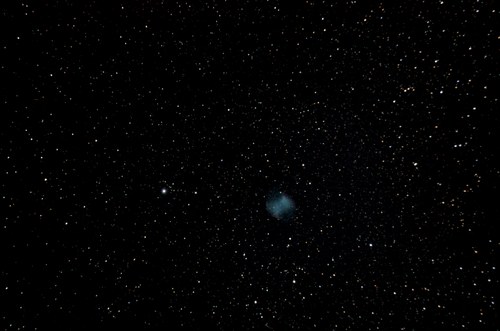
I'm trying out more widefield shots with the D50 lately. Tonight, though, the Moon really washed things out, but I still got a reasonable shot throught the D50. I used PHD Guiding to autoguide and it seemed to work really well. The biggest issue I have with this image is that it appears that I've got a bit of coma going on. Normally the Schmidt-Newtonian's are thought to have a pretty flat field, but that doesn't appear the case in this image, anyway.

September 7, 2008

Moon Comparison (9/7/08 - 9/19/07)

Filed under: Observation Journal — Ed @ 11:51 pm

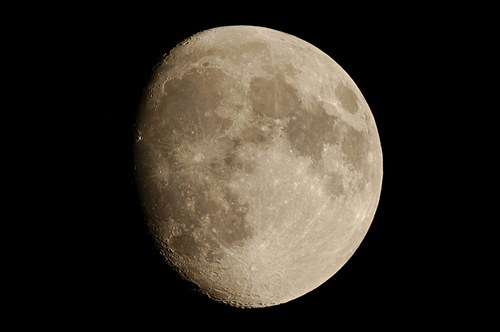
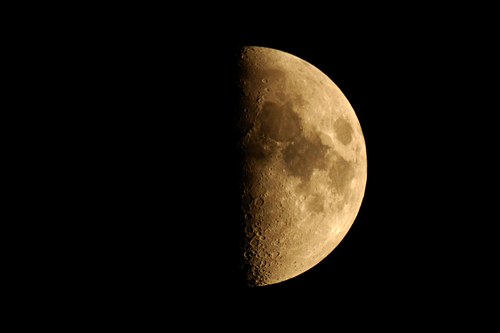
Last year, during September, I took a lot of photos of the moon and I thought it would be interesting to see the differences between last year and this year. First off, I took them with different cameras and different telescopes, but I've resized the images and realigned them to make them look similar. Ignore the color differnece because that's related to how high the moon was when I took the image and using different cameras. The more interesting difference is apparent when you look at the edge of the moon. This year (on the left), you can see more features - the moon is turned a bit to the left from where it was last year (on the right). This is because of a process known as libration. I thought it was pretty cool that this was visible in my images.

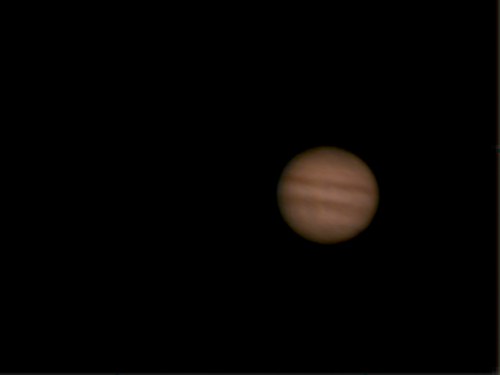
Also tonight I took some images of Jupiter, testing out some equipment. Here's the best one I got:

September 6, 2008

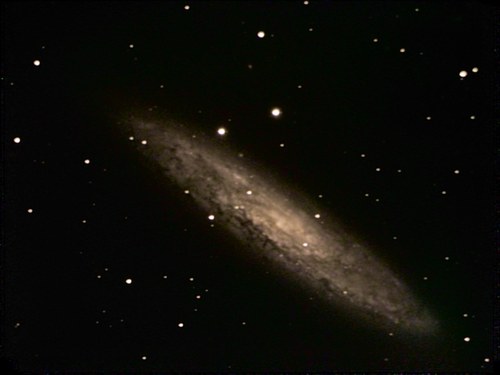
C65-Sculptor Galaxy on 9/6/08

Filed under: astronomy, Astrophotography, Caldwell Object, NGC, Observation Journal — Tags: C65, NGC253 — Ed @ 4:02 am

I stayed up WAY too late, but as I was about to pack things up, having spent a lot of time figuring out some technical stuff with my scope, I thought I'd take a look at an object near where I'd been looking and I pointed the scope to C65, a Caldwell Object, called the Sculptor Galaxy. I had never seen this through my scope or camera before. Through the scope, I could make out a cigar shaped blur, but with the camera, WOW! I couldn't resist and started imaging it. An hour later i finally put everything away, but I was so anxious to see the results that I stayed up to do some quick processing. I'm going to reprocess it when I get the chance, using only the very best frames, which I think will improve it even more, but I'm really excited about this object. I'm planning on returning to it to take a lot more images. It's a really interesting galaxy where the dust and spiral arms have much more definition than most of the galaxies I've imaged. Anyway, very exciting!