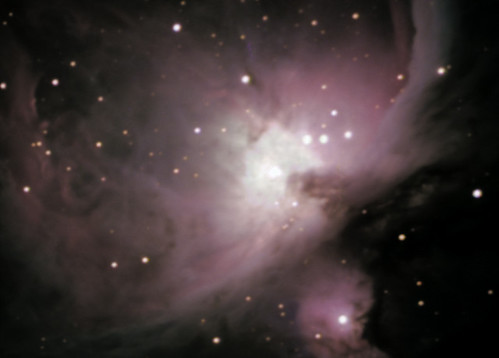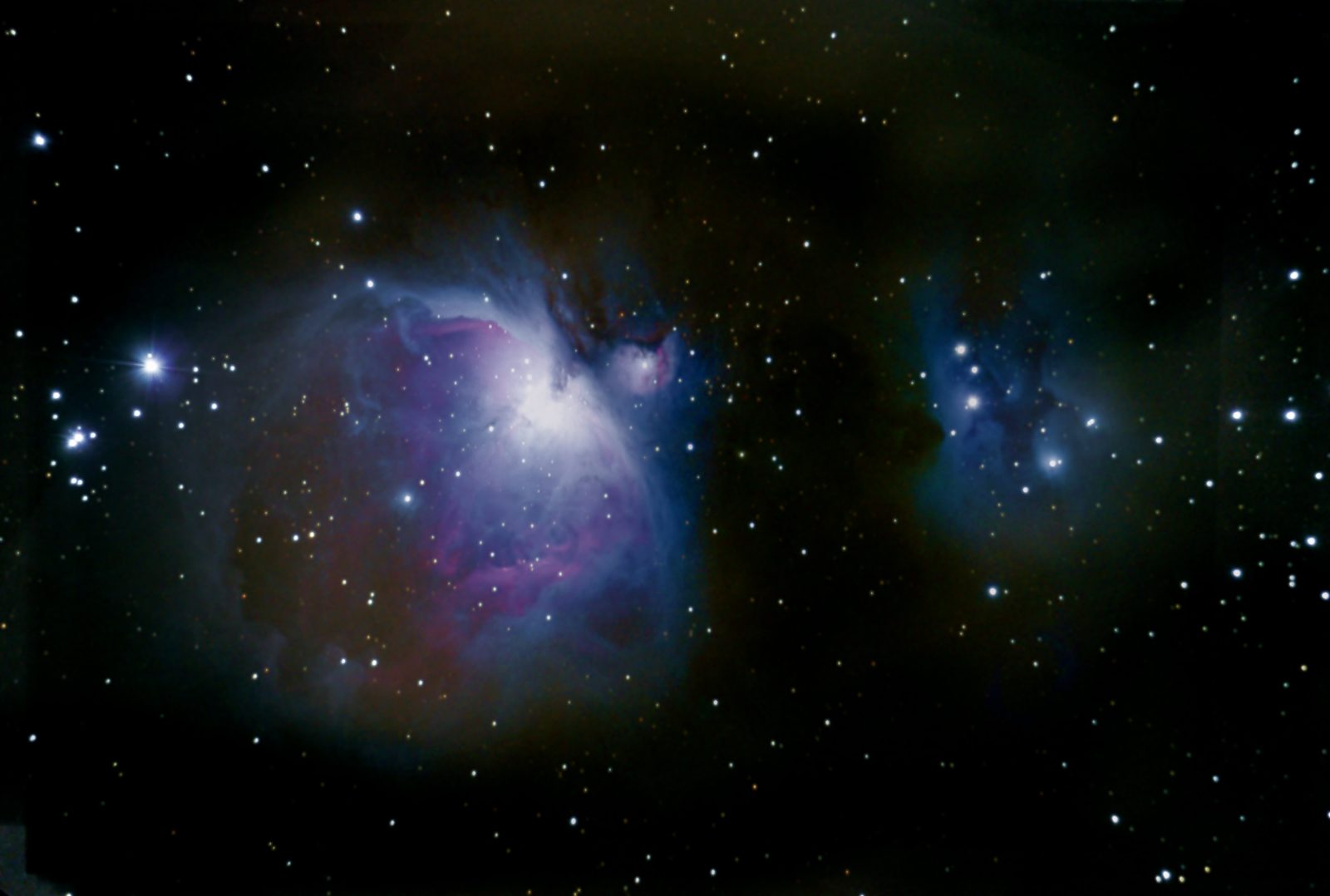
The Great Orion Nebula (M42) and the Running Man Nebula, photographed from Flintstone, Georgia

Flintstone Stargazing

Astronomical observations by a guy in Flintstone, Georgia

M42 – the Great Orion Nebula, February 2009

April 23, 2008

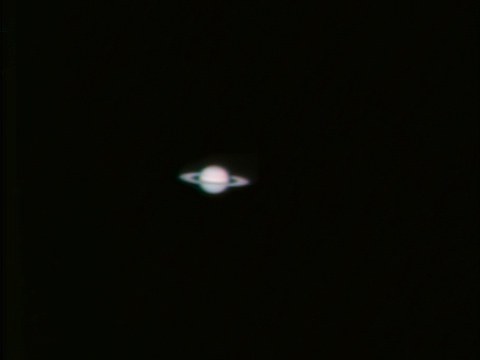
Saturn on 4/23/08

Filed under: astronomy, Astrophotography, Observation Journal, Planets, Saturn — Ed @ 9:50 pm


Saturn on 4/23/08

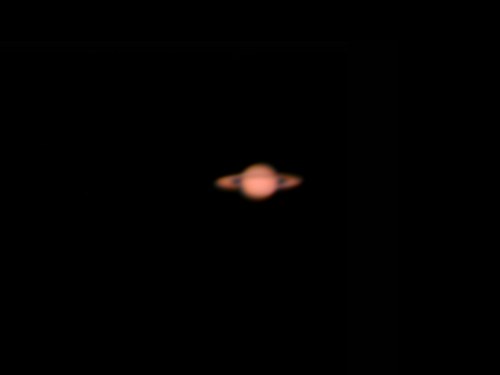
I think this is my best Saturn photo yet. I used my new LPI camera to capture 100 of the best frames (out of about 1500 total frames) which were stacked to make this image. You can see the shadow of the rings on the planet and just a hint of cloud detail (and maybe the Cassini division. Or maybe I'm imagining things). This was taken shortly after I started viewing so the scope hadn't had time to really cool down. I'm still out in my driveway so if I have time, I may go back and take another image now that the scope has cooled down a bit.

Oh, one more thing to note - the dark part across the planet is the shadow of the rings - we're looking at the underside of them. You can just barely see the rings passing in front of the planet at the top.
April 21, 2008

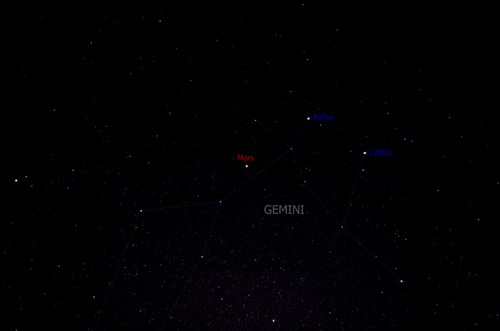
Mars in Gemini

Filed under: astronomy, Astrophotography, Mars, Observation Journal, Planets — Tags: constellation, Gemini — Ed @ 10:15 pm


Mars in Gemini on 4/21/08 (labelled)

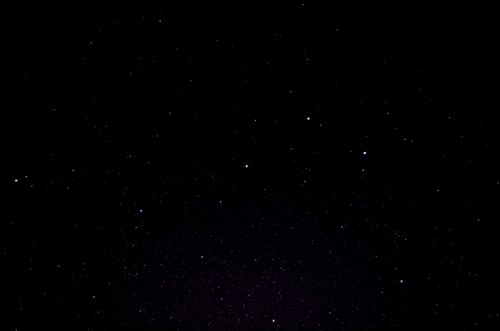
Tonight, I decided to do a bit of wide-field astrophotography. I attached the D50 camera piggyback on my SN-8 telescope. This way, I could take some longer, wide-field exposures without star trails. I took several of these, but just had time to process this one - Mars in the constellation Gemini. The image above is the labelled version - I also uploaded the file without the lines/text for comparison. The full versions of these are quite large, but you can see more detail there. Here it is:

Mars in Gemini on 4/21/08

I'll try to get the others up tomorrow evening, if I can get a bit of time to work on them.

April 16, 2008

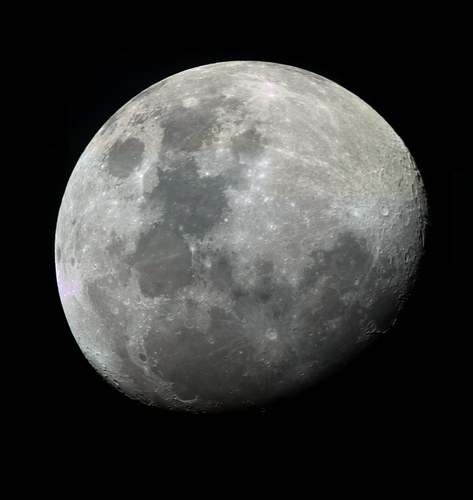
The Moon on 4/16/08

Filed under: astronomy, Astrophotography, Moon, Observation Journal — Ed @ 10:23 pm


The Moon on 4/16/08

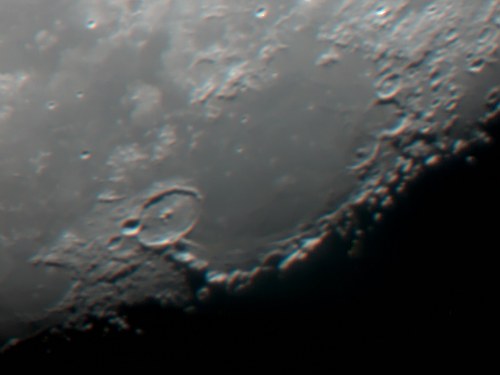
On Monday, I got a new camera for my telescope. It's a Meade Lunar/Planetary Imager (LPI) and is designed for taking shots of the Moon and planets. I had some issues getting it working in Vista, but worked them out last night and got to really try it tonight. I think it worked really well on the Moon - the biggest difficulty is getting the brightness adjusted. Once I put my moon filter on, it worked much better - it was just too bright without the filter. I took 9 shots that I composited to make this panorama shot (it's too zoomed in to get the whole Moon in one image, so I have to stitch them) and I'm really happy with the results. I also took this image through the 3X Barlow:

Moon-Mare Humorum on 4/16/08

It's Mare Humorum, the Sea of Moisture. The large crater to the north of the plain is crater Gassendi which was considered as a possible landing site for Apollo 17 (which wound up at Taurus-Littrow quite far away).

After looking at the Moon for a while, I thought I'd take a look at Saturn. Once I got it on screen, I couldn't ever get the adjustments right; it just never looked very good - kind of green. I decided to call it a night and when disassembling everything realized I still had my Moon filter on the camera. Oops. I'll try to get some good Saturn shots the next clear night I get.

April 11, 2008

April 10, 2008

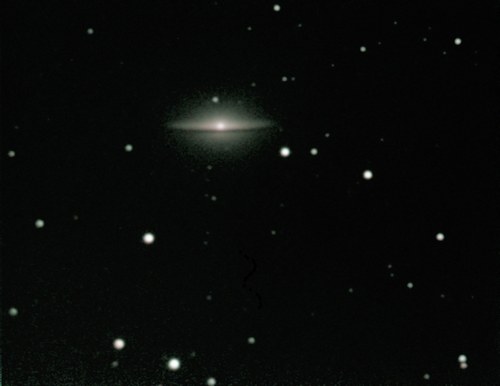
M104-Sombrero Galaxy on 4/10/08

Filed under: astronomy, Astrophotography, Messier Objects, Observation Journal — Tags: Galaxy, M104 — Ed @ 9:50 pm


M104-Sombrero Galaxy on 4/10/08

The sky is beautiful tonight here in the Smokies and so I'm filling in a bit more of my Messier catalog. M104 - The Sombrero Galaxy is quite a sight in the night sky - it's striking dust lane bisects our view of the bright core of the galaxy and is quite visible in this image, though not through my telescope visually.

April 9, 2008

April 8, 2008

The Moon on 4/8/08

Filed under: astronomy, Astrophotography, Moon, Observation Journal — Ed @ 10:11 pm


The Moon on 4/8/08

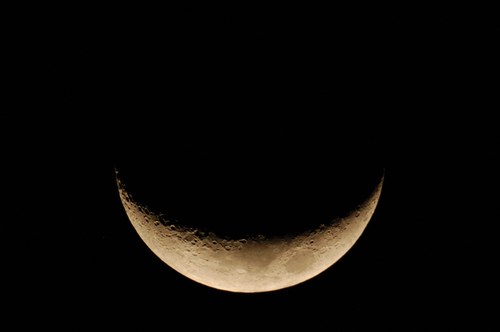
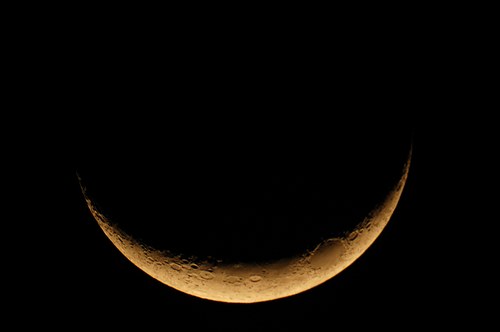
Tonight has been cloudy with hazy seeing conditions so the only decent target is the crescent Moon, low on the horizon (there's a reason they're called the Smokies). Mare Crisium (the Sea of Crises) is prominent to the right of the center of the crescent. I also took a night-time panorama with 30s exposures, but I think I'm going to need to manually stitch that - there weren't enough items for the stitching software to grab onto.

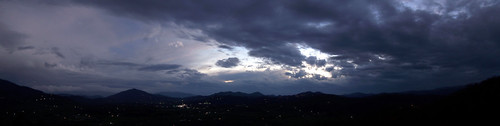
Wear's Valley Sunset 4/8/08

Filed under: Clouds, Observation Journal, Sun — Tags: panorama, sunset — Ed @ 7:04 pm


Wear's Valley Panorama - Sunset 4/8/08

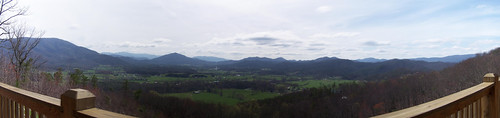
I'm on vacation in Wear's Valley, TN (in the Smokies near Gatlinburg) with my family so I've been taking a bit of a break from astrophotography. I did bring my scopes, but it's been too cloudy for anything thus far (we did do some visual observing the other night - I showed my parents Saturn). Instead, I've been taking multiple exposures and then stitching them together using Autostitch. For scenery shots like this, it works as well as I can imaging and it's free!.

Here are the other two panoramas I've made this week (all are from the front porch of our cabin - click on any of them to view the full version in flickr - they're very large):

Wear's Valley Panorama - Sunrise 4/7/08

Wear's Valley Panorama - Daytime 4/6/08

April 1, 2008

Orion Nebula changed orientation!

Filed under: astronomy, Astrophotography, Messier Objects, Observation Journal — Tags: M42, M43, nebulas, NGC1977 — Ed @ 8:53 am


M42-The Great Orion Nebula

My most recent picture of the Great Orion Nebula (above) indicates that the Great Orion Nebula has completely changed orientation suddenly and without explanation. If you look at the imagebelow that I took just a few weeks ago, you can see what I mean:

M42/M43-The Great Orion Nebula (8
M42-The Great Orion Nebula on 1/27/08

In looking at astronomy sites around the web, I've seen nothing that could explain how the orientation of the Orion Nebula could change suddenly. Large structures like this generally take thousands of years to show significant changes, but for a change this radical to take place is simply unprecedented. I'll provide more details on this as soon as I'm able. How exciting!