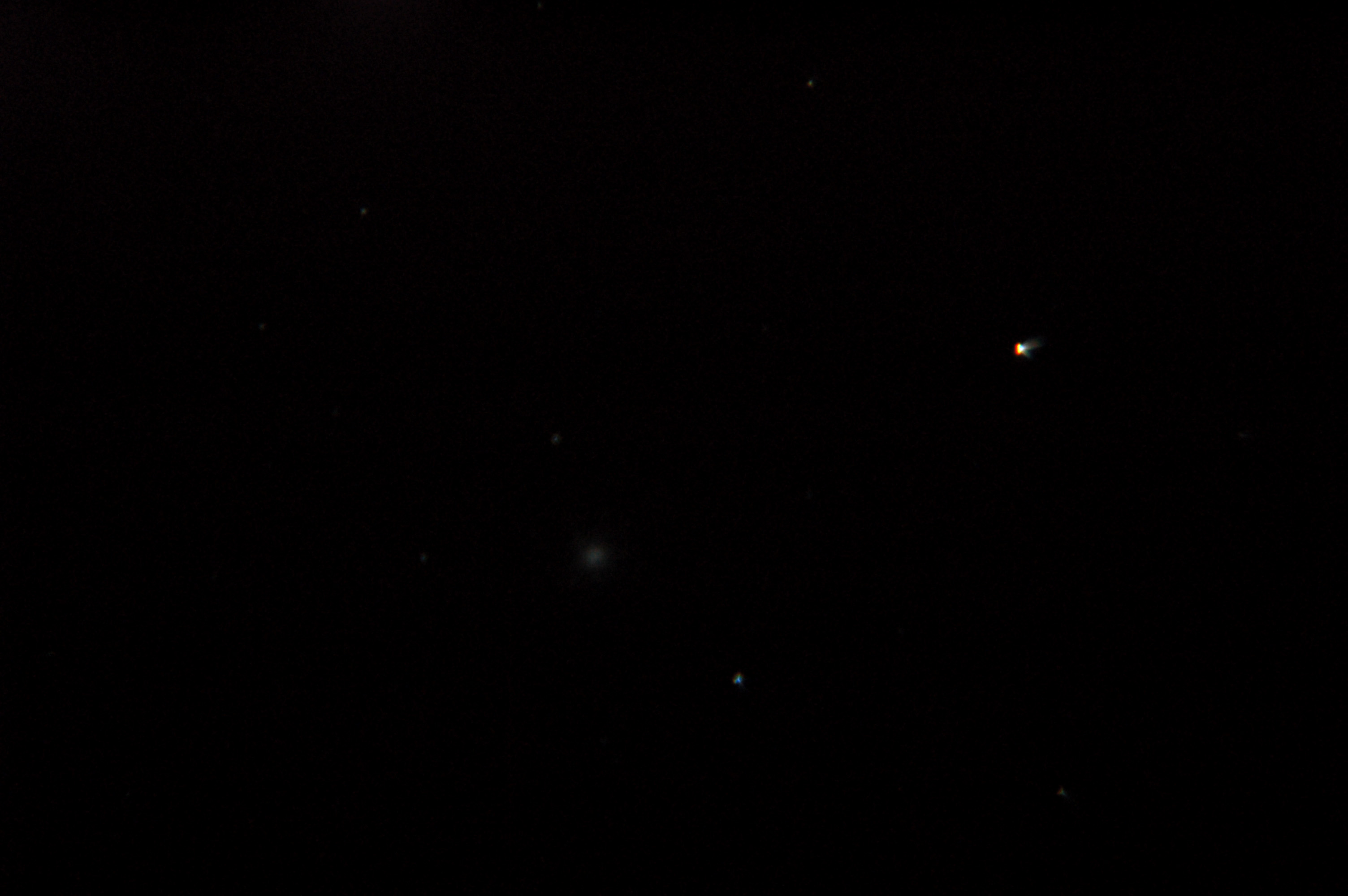
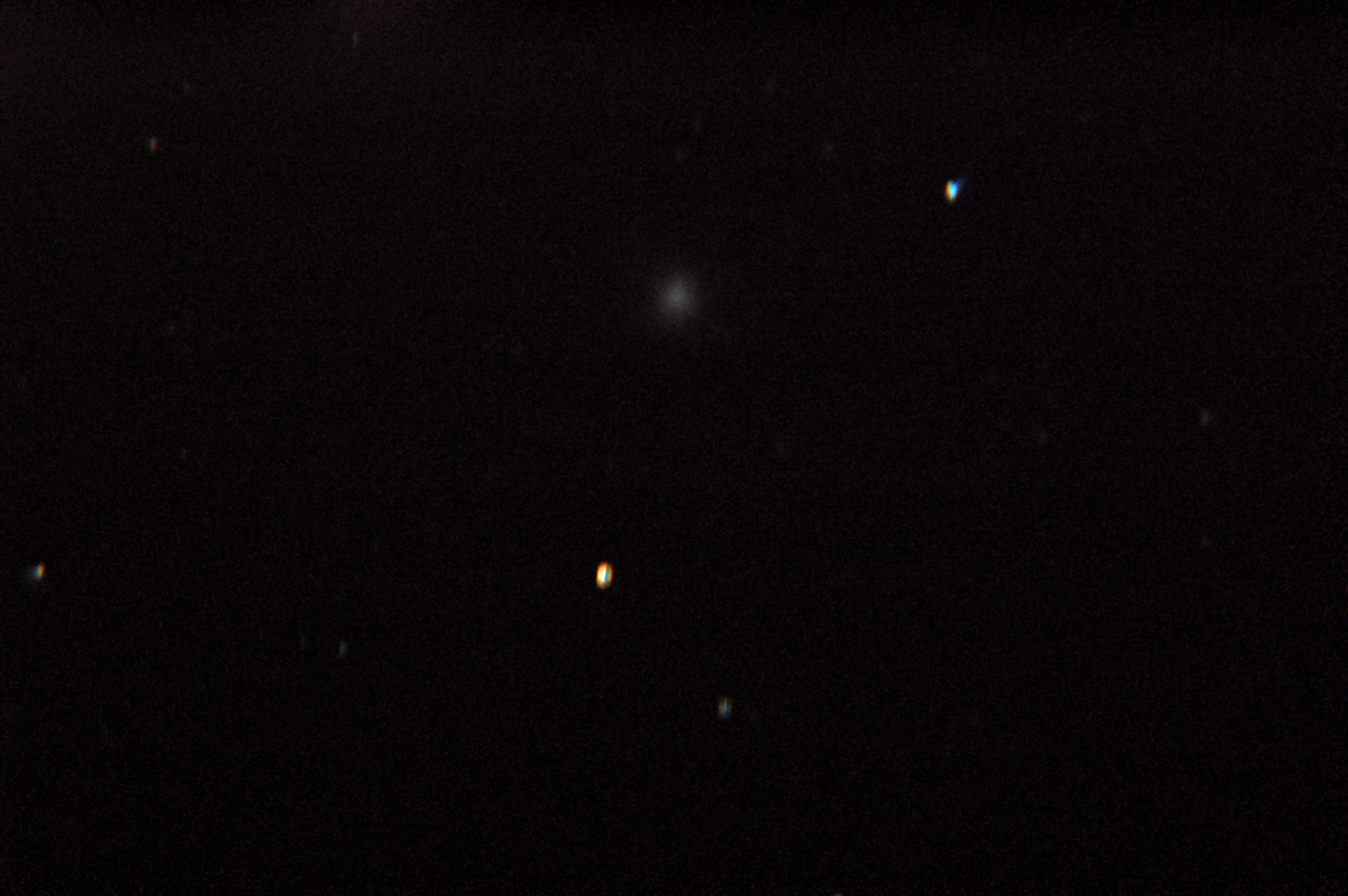
The Great Orion Nebula (M42) and the Running Man Nebula, photographed from Flintstone, Georgia

Flintstone Stargazing

Astronomical observations by a guy in Flintstone, Georgia

M42 – the Great Orion Nebula, February 2009

August 12, 2007

A few Perseids and just one photo

Filed under: astronomy, Astrophotography, Observation Journal — Ed @ 11:14 pm

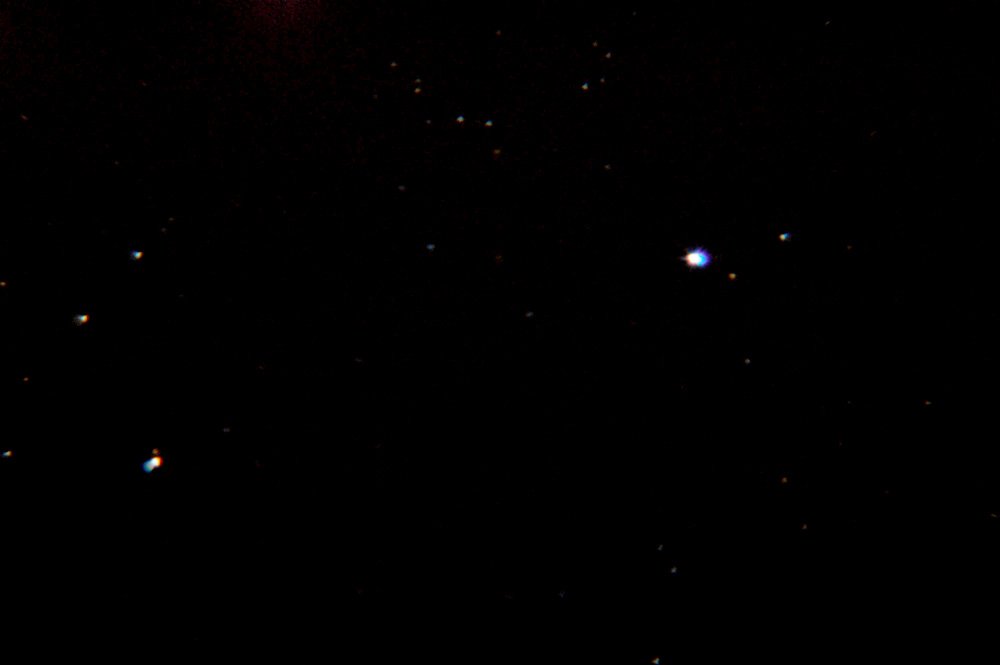
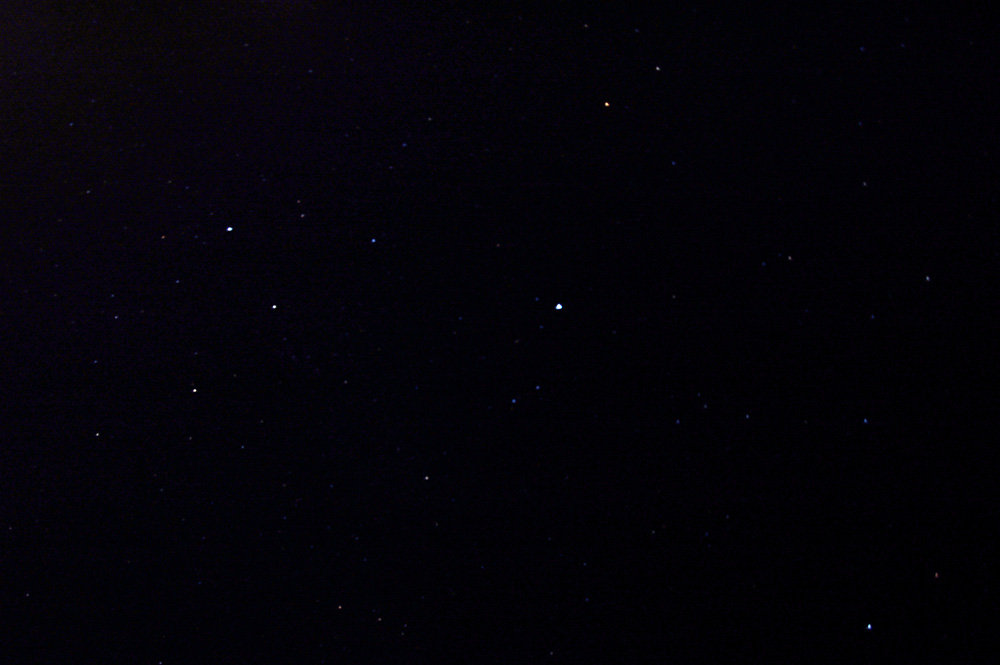
I saw 5 distinct Perseids tonight; the best one was a deep red. Due to their speed, I couldn't really get one on film, though one did shoot through a timed shot I was doing, it wasn't bright enough to show up. Instead the only usable shot of the night was this one - a 30 second photo of the sky directly overhead. As always, click on the photos to get the larger versions.

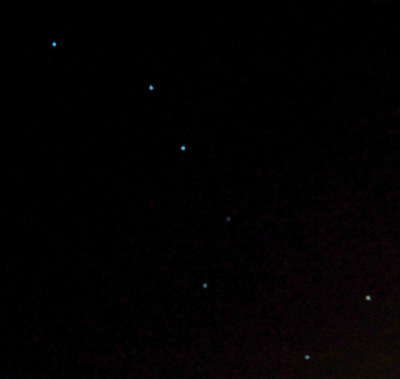
The sky overhead 8/12/07
The sky overhead 8/12/07

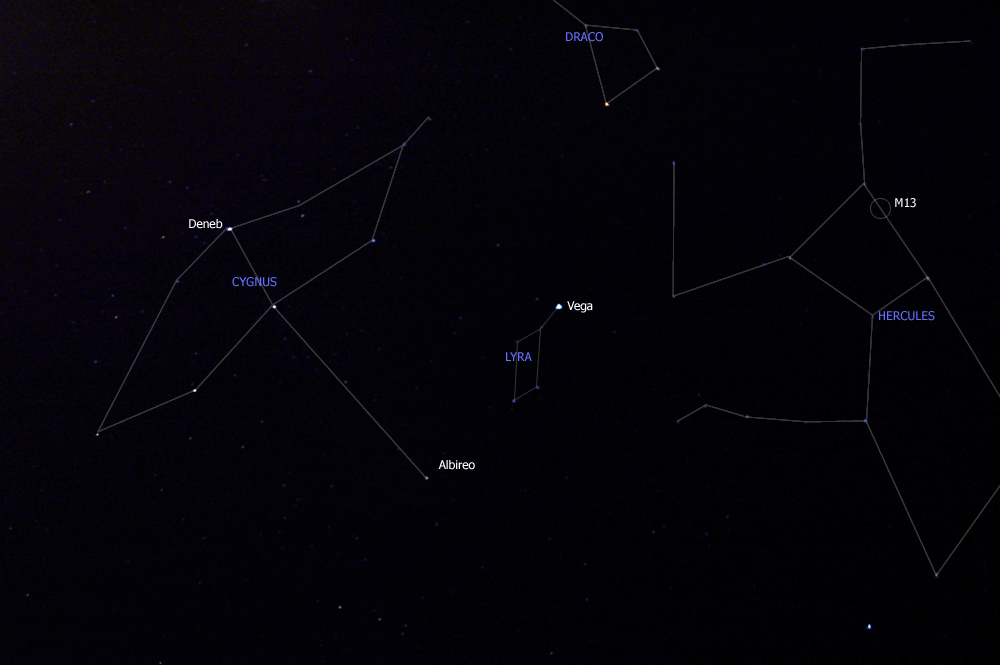
The sky overhead 8/12/07, annotated
The sky overhead 8/12/07 - annotated

Note, in the annotated version that in addition to the constellation outlines and the three brightest star names, I've also indicated the position of M13, which I imaged the other night.

That's all for tonight.

Update: I'm realizing my title may be leading people to think I've got a photo of a meteor here. Sorry if I misled you, it was unintentional.

August 11, 2007

M4, M8 and my battery died

Filed under: astronomy, Astrophotography, Messier Objects, Observation Journal — Tags: M4, M8 — Ed @ 1:32 am

This evening was beautiful. While warm, it wasn't too hot and I set up as usual in my driveway. While there's a fair amount of light down low (instead of street lamsp, the mailboxes are lit) there isn't too much light above my telescope so I'm able to keep a lot of that light from screwing up images. Tonight I decided to try to track down some more Messier objects and particularly find Andromeda once it got high enough in the sky. I started out aligning my telescope at a bit after 10pm and got down to business of finding M4 after trying a couple of test shots on Anteres (which is pretty close to M4). I was able to get a reasonable focus (it's very hard to focus through the viewfinder of the Nikon). Here's what I got:
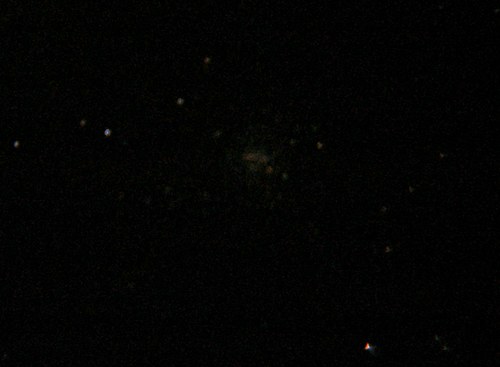
M4, 8/10/07
M4

After getting a couple shots, I headed over to M22, which, as it turns out I took a bunch of out of focus shots of. Next, M8 or M20 (they're very close). I'm pretty sure what I wound up with was M8 - my uncertainty comes from not having a good star chart and having to manually find stuff. That said, M8 looks like it more than M20. If anyone has any definitive answer on this, let me know.
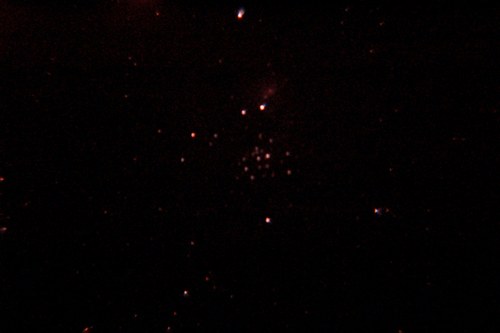
Messier 8, 8/10/07
M8

After M8, I went on to image Andromeda, it being around 11:00 now, it was reasonably high in the sky and I could get it in focus. This time, I had printed out directions on how to get there and, I believe, succesfully found it. I'm more sure now that yesterday I imaged M33 instead (which is nearby). Andromeda appeared much larger. Anway, I took a couple shots, found it was out of focus, focused it in and the camera battery died. Ah well, I'll get it charged and hope to have more clear skies this weekend. Maybe I can see a few more of the Perseids. I saw two tonight - one was a deep red.
August 10, 2007

Some details from last night...

Filed under: astronomy, Astrophotography, Messier Objects, Observation Journal — Tags: M13, M3, M31 — Ed @ 12:24 pm

Well I finally went to bed last night and it was so late, I just put up some big photos. I've had a few minutes over lunch to get some details from the Messier objects I photographed last night. Here they are:

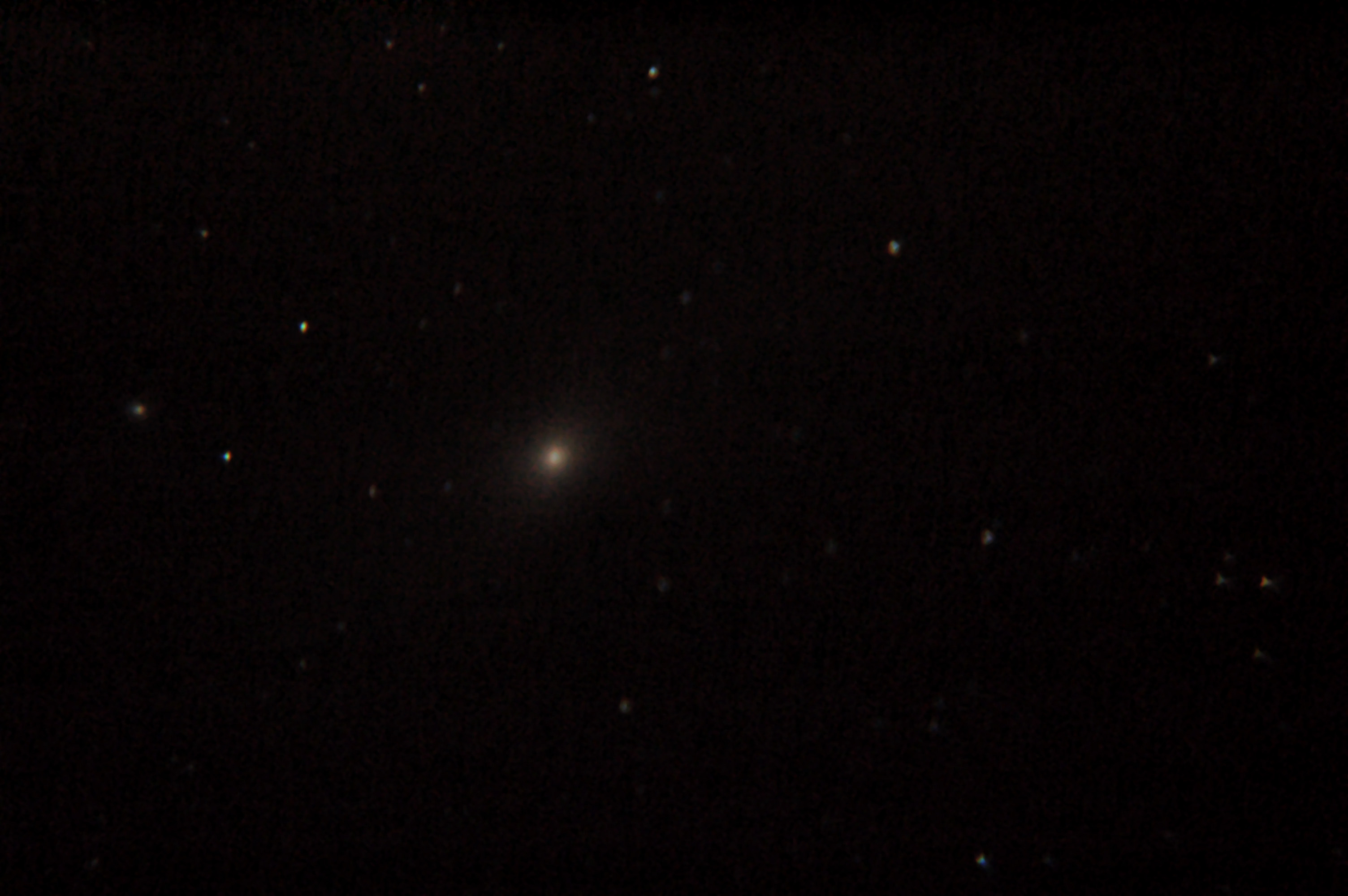
Andromeda Galaxy - Detail View 8/9/07
Andromeda Galaxy (M31) - Detail View

M3 8/9/07
M3 - Detail View

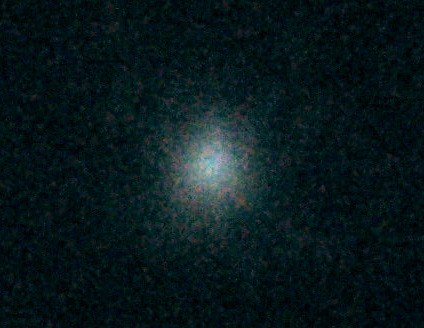
M13 - Detail View 8/9/07
M13 - Detail View

And okay, I'll admit it, the title was intentionally vague. :)

What a beautiful night

Filed under: astronomy, Astrophotography, Messier Objects, Observation Journal — Tags: Double Cluster, M13, M3, M31 — Ed @ 2:48 am

The stars were out in force tonight. I only spotted a few clouds and I got to finally try my tracking motor. What a difference it makes. I've got to get to bed - took too many photos - so I'm just going to post a few of the photos I took tonight. I'll comment more when I've got time.

Andromeda 8/9/07
The Andromeda Galaxy - Full View

M3 8/9/07
M3

M13 8/9/07
M13

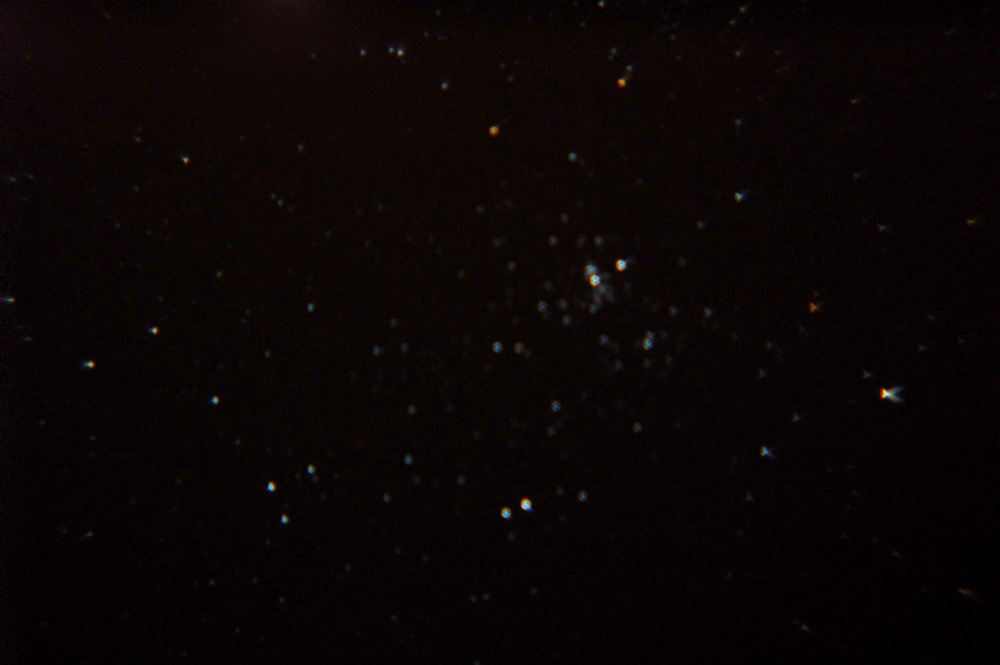
Star Cluster (perhaps Double Cluster near Perseus?) 8/9/07
Star Cluster (perhaps Double Cluster near Perseus?)

A random slice of sky 8/9/07
A random slice of sky

August 8, 2007

Another attempt at Jupiter

Filed under: astronomy, Astrophotography, Jupiter, Observation Journal — Ed @ 11:53 am

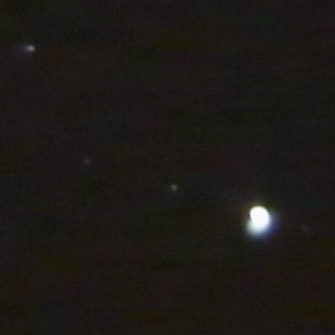
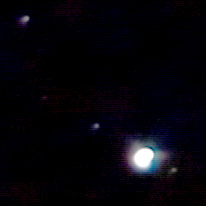
Well Iowa skies were very dark and I had a chance to see the International Space Station fly over - it was brighter than Jupiter, but i don't have any photos from that to share, unfortunately. I'm in St. Louis now, and have been attempting to use video to capture longer exposures. Below are a couple of Jupiter images that I've made, using Registax 4. I'm not sure that my current video camera (a Digital 8 camcorder) is the best choice to use, but you can see the satellites. BTW, does anyone know what the star/moon/whatever is in the upper left corner (it's not in the same plane as the other moons, but I've been seeing it track with Jupiter for a couple weeks now and it's brightness is almsot exactly that of the other moons).

Jupiter in St. Louis

Jupiter in St. Louis 2

July 27, 2007

Clouds again

Filed under: Clouds, Observation Journal — Ed @ 11:05 pm

No stargazing tonight - even the Moon is hidden. Tomorrow I'm heading out with the family to Chicago, Iowa & St. Louis. I'm bringing my telescope and related equipment along and hope to be able to get some pictures. I'm most excited about Iowa. We'll be at my wife's grandfather's farm where it gets very dark with very little light polution so I'm going to try to get some photos of some Messier Objects.

July 26, 2007

Figuring Out Astrophotography

Filed under: astronomy, Astrophotography, Jupiter, Moon, Observation Journal, Planets — Ed @ 11:58 pm

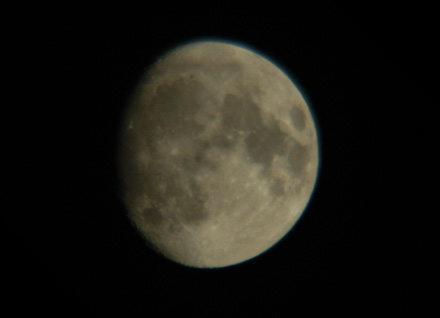
I had somewhat clear skies tonight (at least to the south) and so after getting my telescope set up and aligned, Dave came by and brought the camera. I hooked up the Nikon D50 to the telescope and we spent the first 15 minutes figuring out what went where and what settings to use. We started on the moon - it's a big target and obviously bright -  and kind of dialed in around a 1/100th of a second exposure time which meant that we would be minimizing the motion blur that can come either from camera/telescope shaking or (on longer exposures) the movement of the earth causing the target to appear to move (my motor should arrive next week which will allow me to track stuff and take longer exposures). Here's are some of the moon photos I took. We were using a 25mm eyepiece through which we took the photo.

The Moon on 7/26/07

We also got several more shots of the moon as well as some shots of Jupiter (see below).

Read the rest of this entry »

The Internet is Wonderful

Filed under: astronomy, Astrophotography — Ed @ 7:49 pm

But I guess we all knew that... Today I got my camera mount for my telescope, along with my 3X Barlow (to replace the lousy one that came with my telescope) and right now (7:40pm) things look promising. Since I'm really wanting to get some astrophotography tonight, I figured I ought to go ahead and bite the bullet on figuring out how my German Equatorial Mount (GEM) works so that I could more easily track celestial objects while photographing them. For those of you who aren't familiar with astrophotography, you can get your best results when taking exposures for a long time (more than a second - even minutes or hours sometimes). However, in order to take a good long duration photo (anything more than a small fraction of a second) you're going to need to track the object in the sky. Because the earth is moving, the stars appear to move from east to west in the sky and unless you're tracking them, your photo is going to be a bunch of streaks. The kind of mount I have (the GEM) allows me to be able to track objects by just adjusting one knob. It's really quite clever; and also complicated. I hadn't really figured out how to even use the thing properly yet since I wasn't doing any longer term photography. Well now's the time. I pulled up trusty Google and found both how to align a German Equatorial Mount and how to point a German Equatorial Mount. Both of these things are not obvious and unfortunately the instructions with my telescope mount merely tell how to assemble it, not how to use it. Now, I hope, armed with this knowledge I can get some good photos. I hope to have more to share after this evening.

July 25, 2007