The Moon on 11/16/07

Here's tonight's moon picture. It's even colder tonight than last night, but it's clear and beautiful. The moon, in particular was lovely tonight.
Update: I also took this shot of M31-The Andromeda Galaxy:

Here's tonight's moon picture. It's even colder tonight than last night, but it's clear and beautiful. The moon, in particular was lovely tonight.
Update: I also took this shot of M31-The Andromeda Galaxy:

M31-Andromeda Galaxy on 10/2/07
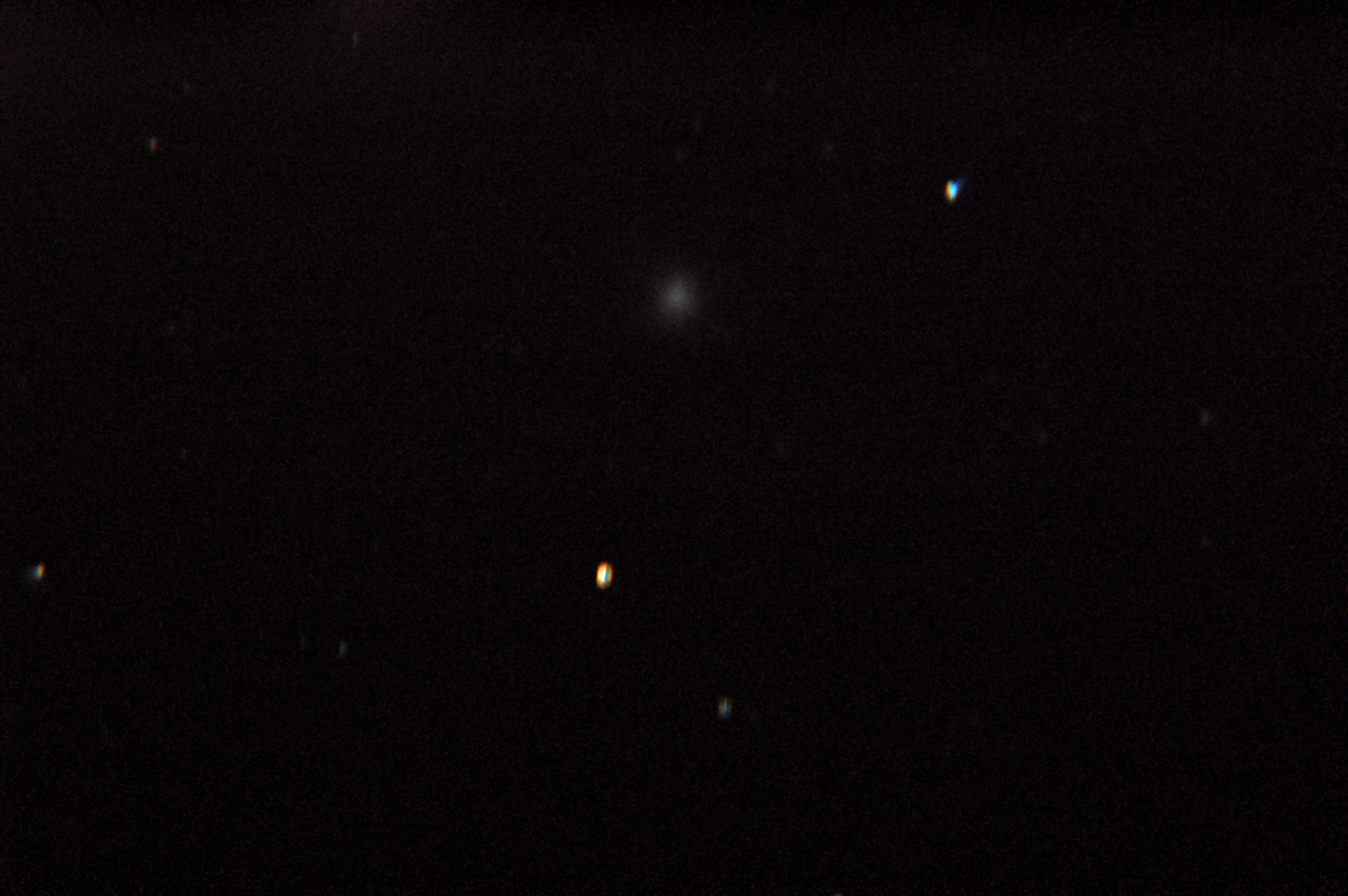
I've taken images of Andromeda before, but after looking at other images of M31(Andromeda), I realized that I had only been imaging the center of the galaxy. Last night, I took 5 images (one of each quarter of this image and one in the center) and combined them in photoshop. What I had minimized in other images I had taken and had thought was just noise was actually the stars and dust lanes of the galaxy. This image brings that out much better than my others. Also, I had known that M32 and M110 were right next to Andromeda, but had never really seen them in my previous images. That's because my previous images weren't of a large enough area. You can see M32 near the top of the photo and M110 in the bottom left. I plan on retaking this kind of image soon because I want to take much longer exposures. You can just barely see one of the dust lanes and the start of another. With a longer exposure, I should be able to pull out a lot more detail.

M31-Andromeda Galaxy (2) on 9/21/07
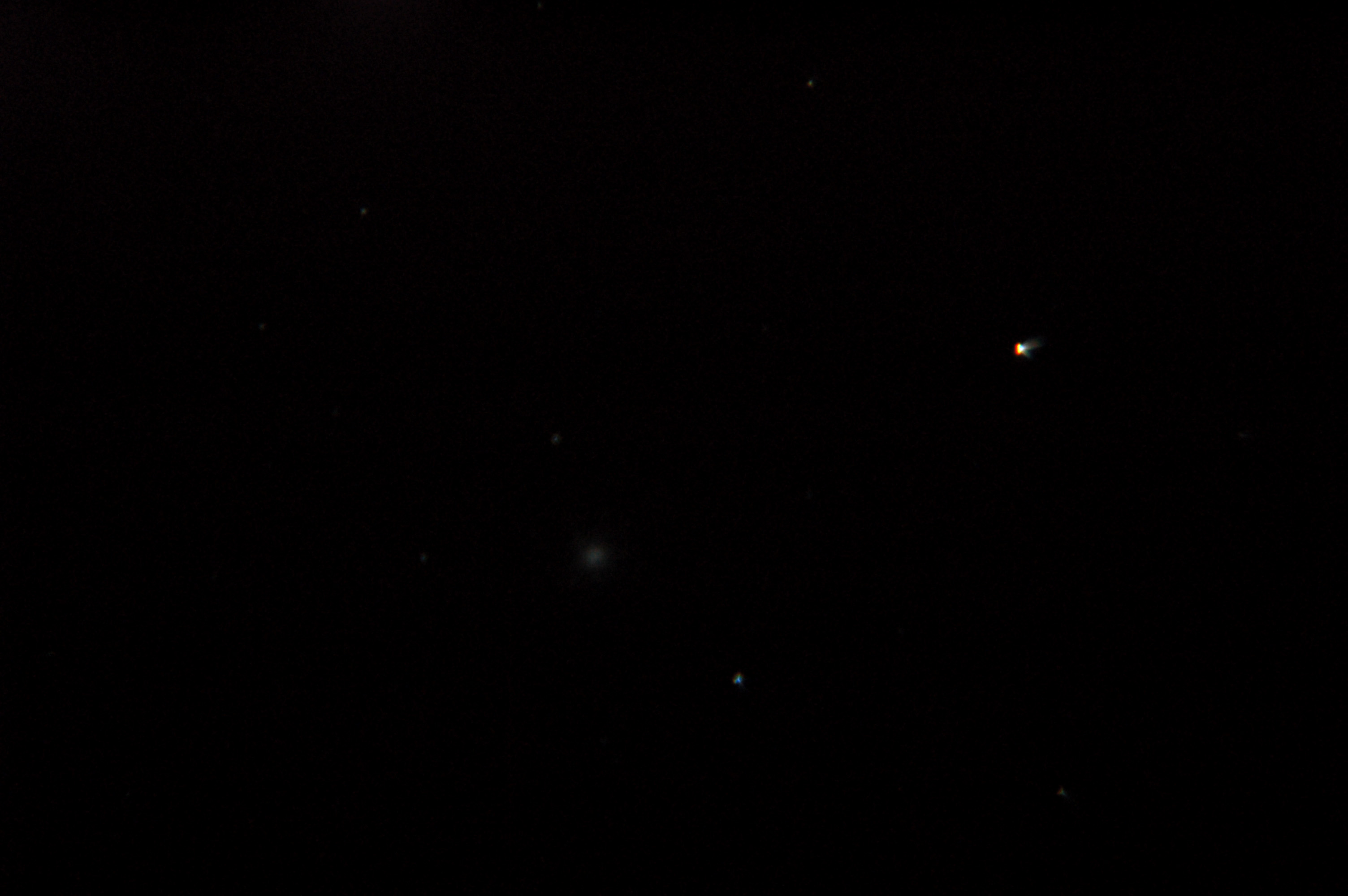
This image is a 12 minute exposure of M31 - The Andromeda Galaxy. My software has combined 90 8 second images to bring out the details. Technically, this image also contains M32 and M110 as well, which are found right by M31. Actually M32 is the small fuzzy bright area near the "top" of Andromeda in this photo and M110 (I believe) is the slightly fuzzy thing at about 4 o'clock from Andromeda's center and just a little ways away.

Andromeda Galaxy (M31) on 9/14/07
Yesterday, I was able to try out my new Meade DSI Color camera for the first time. The camera arrived on Thursday, but I had to wait until Friday for decent viewing. My first target was this shot of Andromeda. While not radically different than the black and white version I was getting with the DSI Pro, I think color adds some warmth.
My next target was M22 - a target I've looked at, but not imaged before. It's found in Sagittarius (a bit to the right and above the teapot lid). I'm not sure it's actually this red, but this is what I got.
Next, I decided to image the Great Globular Cluster in Hercules (M13)- a target I've looked at many times and gotten a number of photos of. This picture, I'm very, very pleased with. I think this probably is the best example of how much the color imaging enhances the image. You can see some of the yellow and blue stars in this cluster.

Great Globular Cluster in Hercules (M13)
At this point, my telescope was starting to accumulate a lot of dew (it was very humid, it rained all day), but since the mirror was clear I decided to press on. I had noticed in my star charting software that Uranus was in Aquarius (Neptune is too, but I didn't see that until after I was viewing) so I decided to see if I could find it. After looking around for a bit, I found it. It has a very faint bluish tinge and is just above the center of the bottom of this image.

Uranus (okay stop laughing...)
I finally turned my attention to M15, a target I haven't imaged before. Below is the result. I think I'm going to try this again on another night and see if I can get better results.
This evening (at least until 10:30) had the best viewing I think I've had all summer. I was able to use Dave's Deep Sky Imager to take the above image of Andromeda (M31) in addition to two other Messier Objects (M13, M4 and M31) before wispy clouds started appearing everywhere. Below are M13 and M4. I also uploaded another Andromeda image to flickr if you want to take a look.

Andromeda Galaxy (M31) - second shot 9/8/07
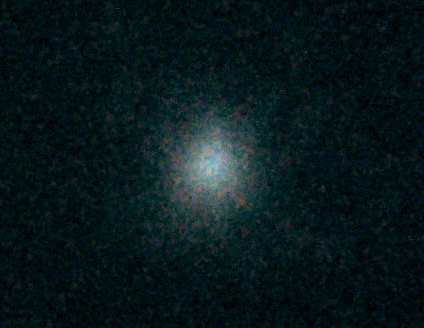
On Saturday night, I borrowed Dave's new Meade Deep Sky Imager (DSI) Pro and tried it out with my telescope. The viewing wasn't too bad and I took a look at several different objects. I only had a small period of time to view the Andromeda Galaxy and so this photo is really the best one I got of it. Andromeda is a spiral galaxy and is M31 in the Messier catalog. The DSI is monochrome - it's meant to be used with colored filters to gather each channel of color seperately, but I don't have any of the filters yet. That said, once the camera cooled down (which is important for getting a decent image) I was able to take the image above. Andromeda is the galaxy on the left of the picture and there's enough detail that you can (if you look closely) observe M110 as the very small blur to the left of Andromeda. I'm hoping I get a really clear night this week so that I can take some really long exposures of it which should help reveal a lot of detail that can't be seen in this short exposure.
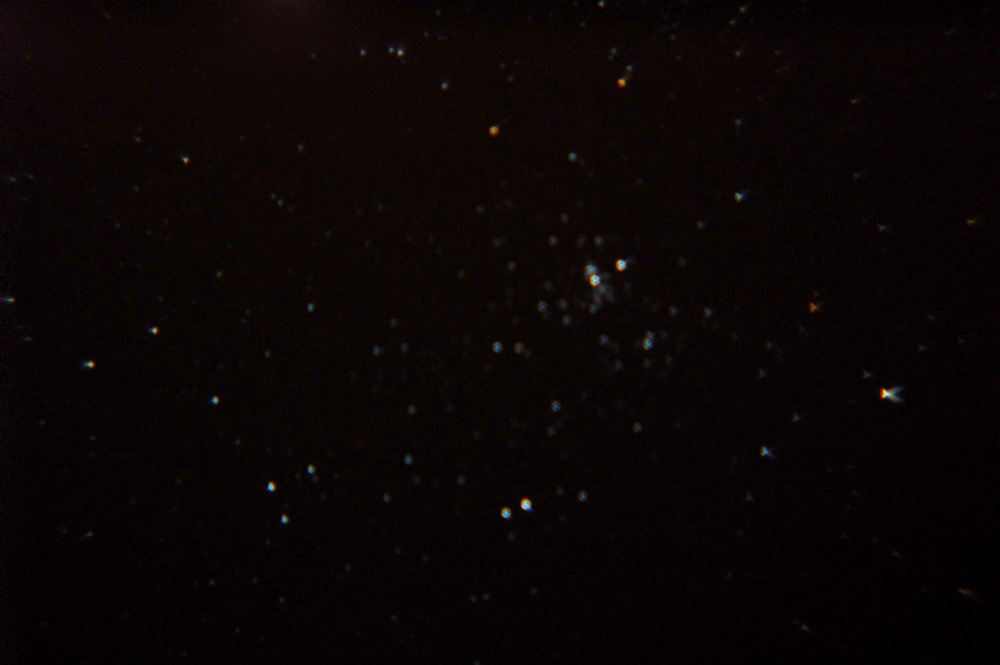
I also got this shot of the Double Cluster near Perseus (though I always find it from Cassiopeia) which I don't think is all that good. I'm still figuring out how to get the most out of this device.
Unfortunately, tonight is completely covered up with clouds. Of course that means I'll actually get some sleep...
Well I finally went to bed last night and it was so late, I just put up some big photos. I've had a few minutes over lunch to get some details from the Messier objects I photographed last night. Here they are:

Andromeda Galaxy (M31) - Detail View
And okay, I'll admit it, the title was intentionally vague. :)
The stars were out in force tonight. I only spotted a few clouds and I got to finally try my tracking motor. What a difference it makes. I've got to get to bed - took too many photos - so I'm just going to post a few of the photos I took tonight. I'll comment more when I've got time.
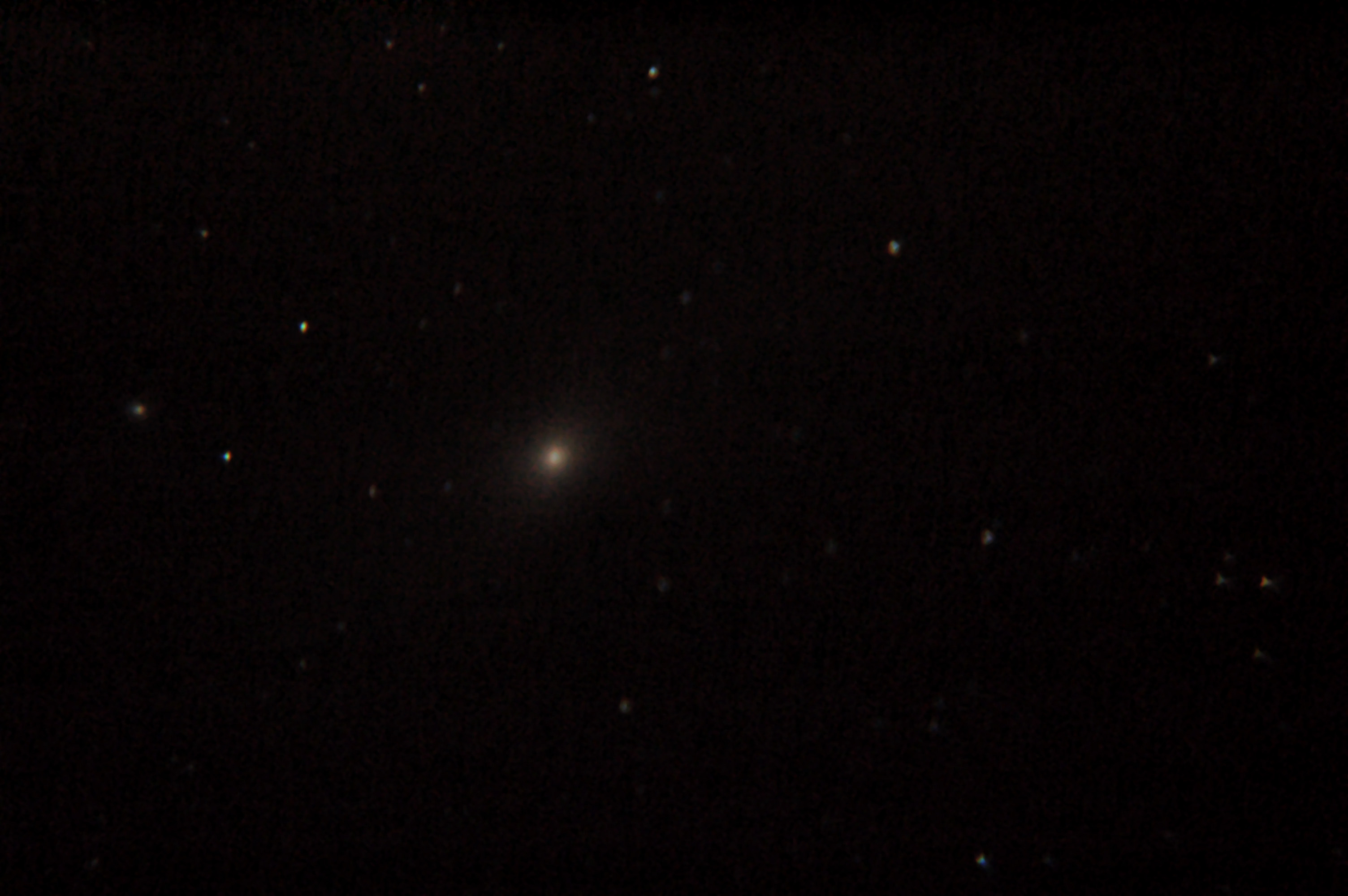
The Andromeda Galaxy - Full View